

Paparan:488
Masa:2026-05-19 15:58:17 Penulis: NiceNIC 
Reporting Period
April 1, 2026 to April 30, 2026
Introduction
This report provides a factual summary of abuse-related complaint activity recorded by NiceNIC during April 2026.
As part of our ongoing transparency effort, NiceNIC publishes monthly abuse data to provide clearer visibility into complaint volume, abuse category distribution, response timing, domain pausing activity, and recovery outcomes.
Monthly Overview
During April 2026, NiceNIC recorded:
Total Complaints: 28,176
Total Domains Involved: 10,314
Average Response Time: 2.0 days
Total Paused Domains: 8,160
Pause Rate: 79.1%
Recovered Domains: 350
Recovery Rate: 4.29%
Compared with March 2026, the total number of complaints decreased from 33,827 to 28,176. The number of domains involved also decreased from 14,935 to 10,314. This indicates a lower overall complaint load in April, although phishing remained the dominant category.
The average response time increased slightly from 1.7 days in March to 2.0 days in April. While individual case complexity may vary, the data still shows that abuse review and mitigation activity continued on a rolling basis throughout the month.
The suspension rate for April was 79.1%, with 8,160 domains paused during the reporting period. This reflects confirmed enforcement activity where the available evidence met the required action threshold.
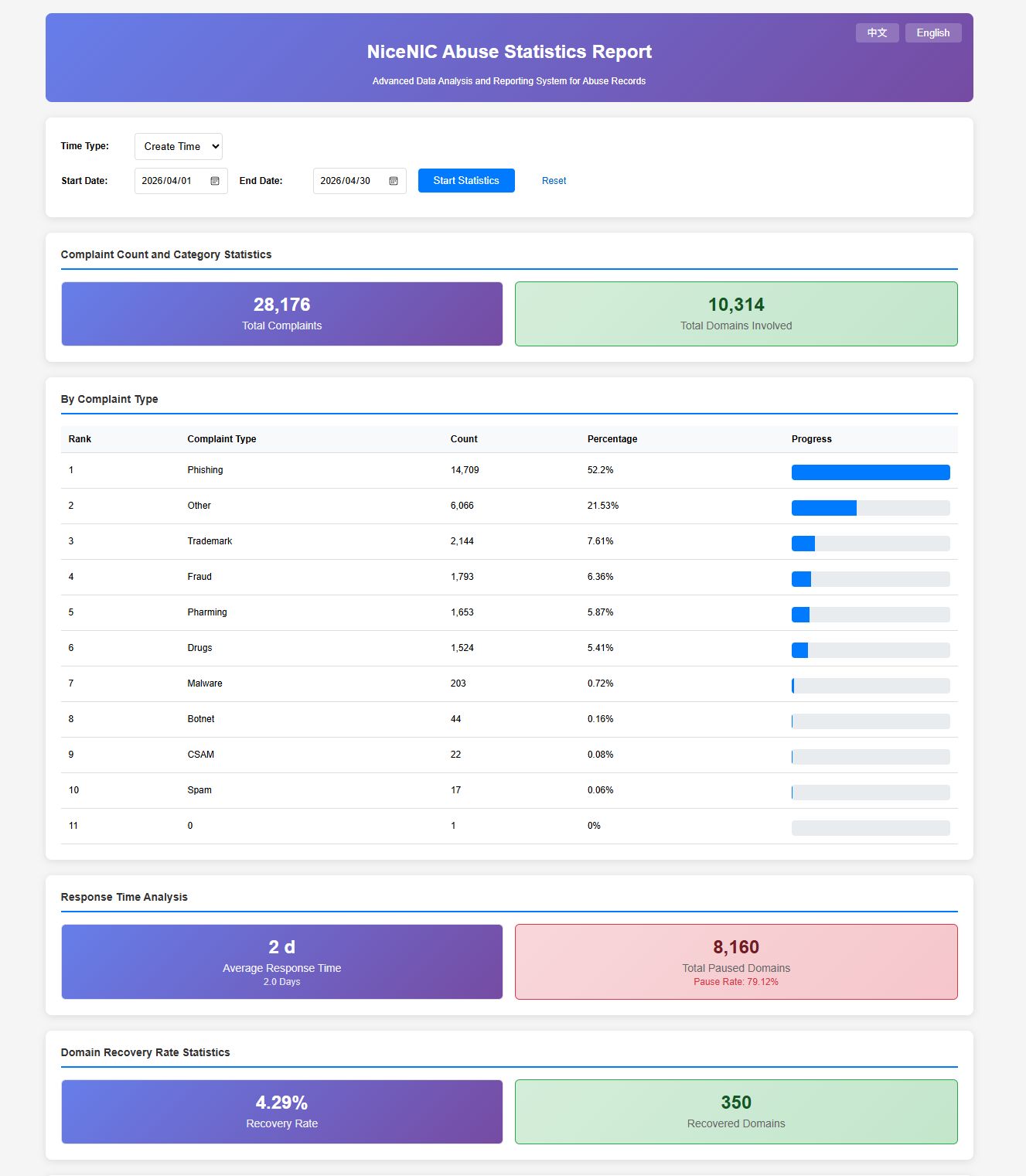
Complaint Categories
1. Phishing
14,709 cases
52.2% of total complaints
Phishing remained the largest abuse category in April. Although the phishing percentage was lower than March, it still represented more than half of all complaints received during the month.
Phishing cases are treated as high-priority. NiceNIC continues to prioritize timely review and mitigation where phishing activity is confirmed by credible evidence.
2. Other
6,066 cases
21.53%
The "Other" category represented the second largest portion of April complaints. NiceNIC will continue improving internal classification accuracy so that future reports can provide more precise segmentation wherever possible.
3. Trademark
2,144 cases
7.61%
Trademark-related complaints accounted for 7.61% of total April complaints. These cases are reviewed carefully because not every trademark-related dispute qualifies as DNS abuse.
4. Fraud
1,793 cases
6.36%
Fraud complaints included reports involving deceptive schemes, false representation, suspicious commercial activity, or other abuse patterns not strictly classified as phishing.
5. Pharming
1,653 cases
5.87%
Pharming complaints accounted for 5.87% of total complaints in April. Because pharming can directly affect user safety and DNS integrity, confirmed cases are subject to strict escalation and mitigation procedures.
6. Drugs
1,524 cases
5.41%
This category primarily involves reports related to unlawful online pharmaceutical sales, restricted substance promotion, or suspicious websites associated with drug-related content.
7. Malware
203 cases
0.72%
Malware-related complaints represented a smaller portion of April's total complaint volume. These cases may involve malicious downloads, infected websites, exploit delivery, or domains used to support malware infrastructure.
8. Botnet
44 cases
0.16%
While the complaint volume was relatively low, botnet cases remain operationally important.
9. CSAM
22 cases
0.08%
CSAM-related reports are handled with strict escalation and high sensitivity.
10. Spam
17 cases
0.06%
Spam complaints represented a small portion of the monthly total.
11. Unclassified Internal Category
1 case
Less than 0.01%
The average response time in April was 2.0 days.
Some cases can be reviewed quickly when the evidence is clear. Other cases may take longer because they require further checks, communication with the domain holder, or coordination with another party.

Suspended Domains and Recovery
In April, 8,160 domains were suspended, with a pause rate of 79.1%. This means action was taken when the report was supported by enough evidence and met the required handling standard.
At the same time, 350 domains were recovered, with a recovery rate of 4.29%. Recovery is an important part of abuse handling. In some cases, a domain holder may remove harmful content, fix a security issue, correct a misconfiguration, or provide valid information showing that the domain should be restored.
NiceNIC's goal is not only to stop confirmed abuse, but also to give legitimate domain holders a clear path to resolve problems when possible.
Operational and Compliance Perspective
NiceNIC operates under strict adherence to ICANN abuse handling obligations. Our workflow includes:
Industry Context
Phishing accounting for over sixty percent of complaints aligns with global DNS abuse statistics reported by multiple industry monitoring organizations. The data reinforces the need for registrars to maintain robust abuse detection and response frameworks.
NiceNIC continues investing in automation, structured reporting systems, and compliance training to ensure abuse mitigation evolves alongside emerging threat patterns.
Closing Note
The April 2026 data shows that NiceNIC continued to review abuse reports, pause domains when evidence supported action, and restore domains when valid recovery conditions were met.
Complaint volume decreased compared with March, but phishing remained the largest risk category. This confirms that abuse handling must remain a steady and ongoing responsibility, not a one-time action.
NiceNIC will continue publishing monthly abuse reports as part of our commitment to transparency, accountability, and safer domain management.
We welcome feedback from customers, partners, security researchers, and the wider internet community. Public trust is built through consistent action, clear data, and responsible handling of every valid report.
April 1, 2026 to April 30, 2026
Introduction
This report provides a factual summary of abuse-related complaint activity recorded by NiceNIC during April 2026.
As part of our ongoing transparency effort, NiceNIC publishes monthly abuse data to provide clearer visibility into complaint volume, abuse category distribution, response timing, domain pausing activity, and recovery outcomes.
Monthly Overview
During April 2026, NiceNIC recorded:
Total Complaints: 28,176
Total Domains Involved: 10,314
Average Response Time: 2.0 days
Total Paused Domains: 8,160
Pause Rate: 79.1%
Recovered Domains: 350
Recovery Rate: 4.29%
Compared with March 2026, the total number of complaints decreased from 33,827 to 28,176. The number of domains involved also decreased from 14,935 to 10,314. This indicates a lower overall complaint load in April, although phishing remained the dominant category.
The average response time increased slightly from 1.7 days in March to 2.0 days in April. While individual case complexity may vary, the data still shows that abuse review and mitigation activity continued on a rolling basis throughout the month.
The suspension rate for April was 79.1%, with 8,160 domains paused during the reporting period. This reflects confirmed enforcement activity where the available evidence met the required action threshold.
Complaint Categories
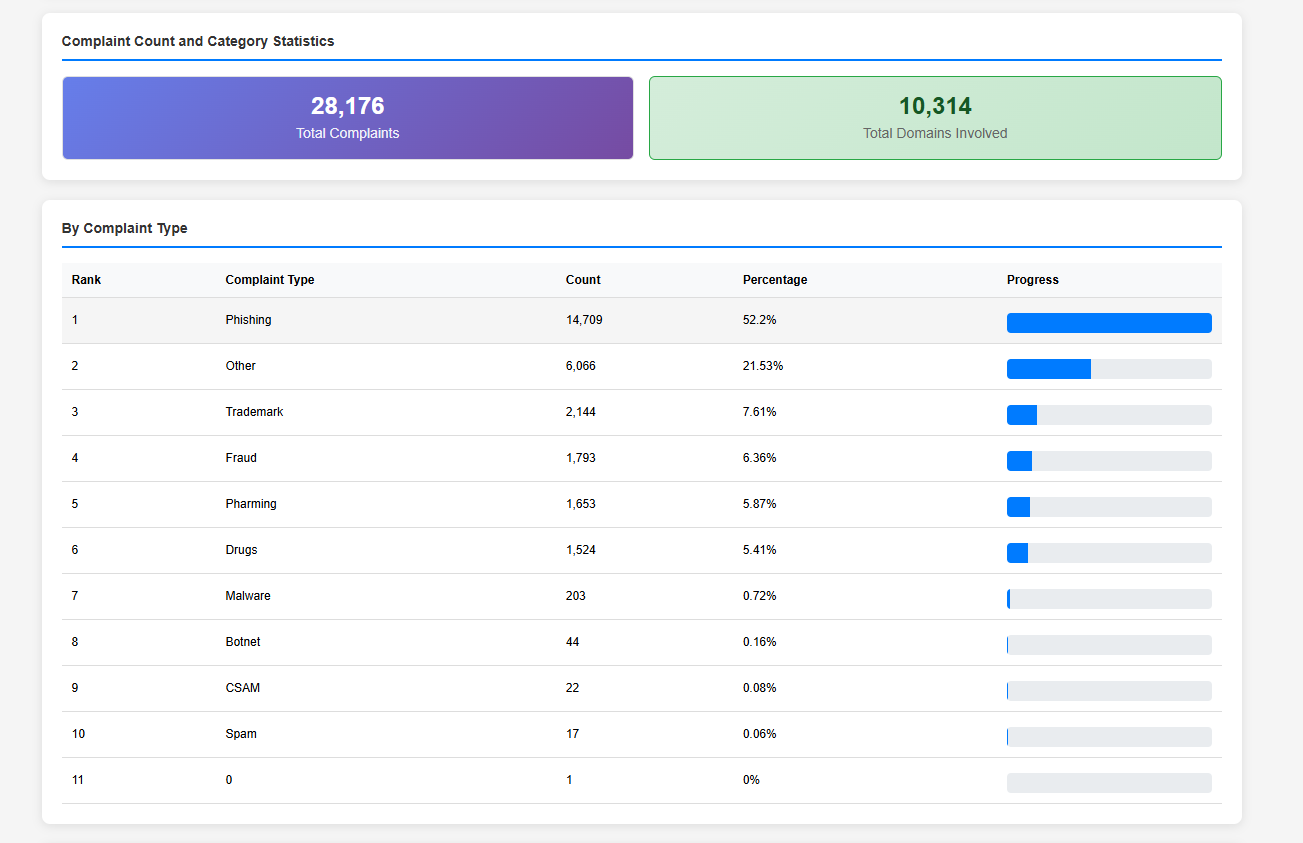
14,709 cases
52.2% of total complaints
Phishing remained the largest abuse category in April. Although the phishing percentage was lower than March, it still represented more than half of all complaints received during the month.
Phishing cases are treated as high-priority. NiceNIC continues to prioritize timely review and mitigation where phishing activity is confirmed by credible evidence.
2. Other
6,066 cases
21.53%
The "Other" category represented the second largest portion of April complaints. NiceNIC will continue improving internal classification accuracy so that future reports can provide more precise segmentation wherever possible.
3. Trademark
2,144 cases
7.61%
Trademark-related complaints accounted for 7.61% of total April complaints. These cases are reviewed carefully because not every trademark-related dispute qualifies as DNS abuse.
4. Fraud
1,793 cases
6.36%
Fraud complaints included reports involving deceptive schemes, false representation, suspicious commercial activity, or other abuse patterns not strictly classified as phishing.
5. Pharming
1,653 cases
5.87%
Pharming complaints accounted for 5.87% of total complaints in April. Because pharming can directly affect user safety and DNS integrity, confirmed cases are subject to strict escalation and mitigation procedures.
6. Drugs
1,524 cases
5.41%
This category primarily involves reports related to unlawful online pharmaceutical sales, restricted substance promotion, or suspicious websites associated with drug-related content.
7. Malware
203 cases
0.72%
Malware-related complaints represented a smaller portion of April's total complaint volume. These cases may involve malicious downloads, infected websites, exploit delivery, or domains used to support malware infrastructure.
8. Botnet
44 cases
0.16%
While the complaint volume was relatively low, botnet cases remain operationally important.
9. CSAM
22 cases
0.08%
CSAM-related reports are handled with strict escalation and high sensitivity.
10. Spam
17 cases
0.06%
Spam complaints represented a small portion of the monthly total.
11. Unclassified Internal Category
1 case
Less than 0.01%
The average response time in April was 2.0 days.
Some cases can be reviewed quickly when the evidence is clear. Other cases may take longer because they require further checks, communication with the domain holder, or coordination with another party.
Suspended Domains and Recovery
In April, 8,160 domains were suspended, with a pause rate of 79.1%. This means action was taken when the report was supported by enough evidence and met the required handling standard.
At the same time, 350 domains were recovered, with a recovery rate of 4.29%. Recovery is an important part of abuse handling. In some cases, a domain holder may remove harmful content, fix a security issue, correct a misconfiguration, or provide valid information showing that the domain should be restored.
NiceNIC's goal is not only to stop confirmed abuse, but also to give legitimate domain holders a clear path to resolve problems when possible.

Operational and Compliance Perspective
NiceNIC operates under strict adherence to ICANN abuse handling obligations. Our workflow includes:
- Evidence based evaluation
- Abuse source validation
- Registrant notification
- Remediation opportunity
- Escalation when required
- Clear record keeping for legal and regulatory review
Industry Context
Phishing accounting for over sixty percent of complaints aligns with global DNS abuse statistics reported by multiple industry monitoring organizations. The data reinforces the need for registrars to maintain robust abuse detection and response frameworks.
NiceNIC continues investing in automation, structured reporting systems, and compliance training to ensure abuse mitigation evolves alongside emerging threat patterns.
Closing Note
The April 2026 data shows that NiceNIC continued to review abuse reports, pause domains when evidence supported action, and restore domains when valid recovery conditions were met.
Complaint volume decreased compared with March, but phishing remained the largest risk category. This confirms that abuse handling must remain a steady and ongoing responsibility, not a one-time action.
NiceNIC will continue publishing monthly abuse reports as part of our commitment to transparency, accountability, and safer domain management.
We welcome feedback from customers, partners, security researchers, and the wider internet community. Public trust is built through consistent action, clear data, and responsible handling of every valid report.
BERITA BERKAITAN:
Berita Sebelumnya:
Dari Perhimpunan Kedai Teh ke Perkhidmatan Domain Global: Budaya Stabil dan Amanah NiceNIC
Berita Seterusnya: Balanced Teams, Better Support: How NiceNIC Builds Trust for Global Domain Customers
Berita Seterusnya: Balanced Teams, Better Support: How NiceNIC Builds Trust for Global Domain Customers