

Брой посещения:421
Време:2026-05-15 15:02:13 Автор: NiceNIC 
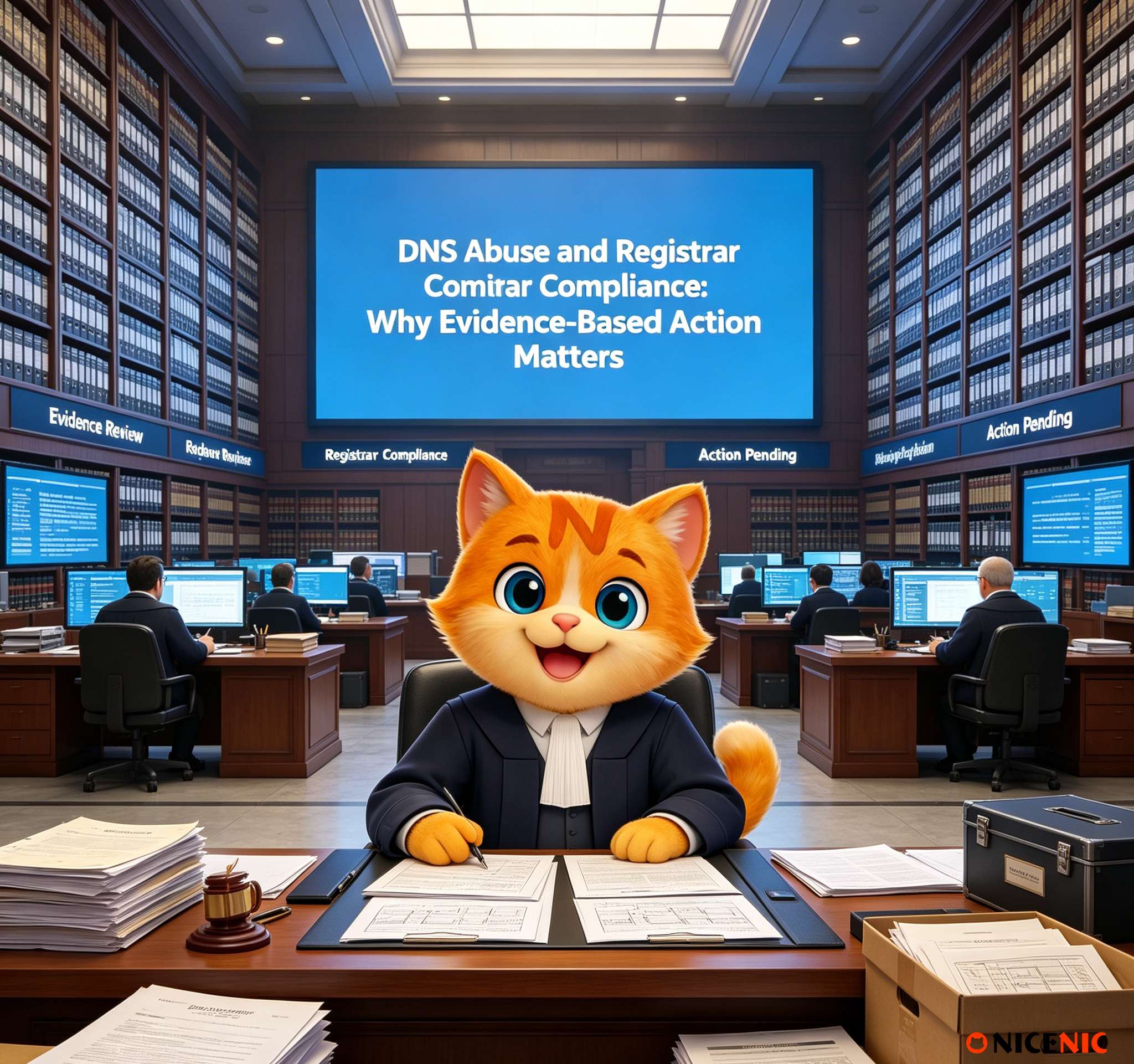
DNS Abuse compliance is now one of the most important trust issues in the domain industry. For domain owners, reporters, registrars, registries, hosting providers, and security teams, the challenge is not only to respond quickly. The challenge is to respond correctly, based on evidence, role responsibility, and applicable domain policies.
As an ICANN-accredited registrar, NiceNIC believes that responsible abuse handling must protect two things at the same time: Internet users from real harm, and legitimate domain owners from rushed or unsupported action.
That balance is not always easy. But it is necessary for a safer and more trustworthy domain ecosystem.
What Is DNS Abuse?
DNS Abuse generally refers to specific forms of harmful activity involving domain names and DNS infrastructure. In the ICANN framework, the commonly referenced categories include malware, botnets, phishing, pharming, and spam when spam is used as a delivery mechanism for those forms of abuse. This definition matters because not every complaint about a website is DNS Abuse.
Some complaints may involve content disputes, trademark issues, business disagreements, payment disputes, copyright claims, hosting content, or website behavior. These may still be serious, but they may not always fall within the registrar's direct DNS Abuse mitigation role.
A registrar must understand the difference before taking action. That is why NiceNIC provides educational resources such as "What Is DNS Abuse?" to help users and reporters understand the difference between DNS Abuse and other types of online disputes.
Why Evidence Matters in Abuse Handling
A domain name is part of an online identity. Suspending or placing a domain on hold can affect websites, email, business operations, customers, and reputation. That is why evidence matters.
A strong abuse report should usually include:
- the reported domain name
- specific URLs, not only the root domain
- screenshots where useful
- security scan results or technical indicators
- explanation of the alleged abuse type
- timestamps
- evidence showing how the domain is involved
- any relevant law enforcement or platform notice, where applicable
A vague statement such as "this domain is bad" is not enough for a responsible registrar decision. Evidence-based handling helps registrars act against real abuse while reducing the risk of unfair action against legitimate registrants.
The Registrar's Role Is Important, but Not Unlimited
A registrar manages domain registration services. A registry operates the top-level domain. A hosting provider controls hosting infrastructure. A DNS provider may control DNS resolution. A website operator controls website content.
These roles can overlap in the user's mind, but they are not the same. When a complaint arrives, a registrar must determine whether the issue falls within registrar responsibility, registry policy, DNS-level mitigation, hosting-level action, or another dispute process.
For example:
- Phishing using a registered domain may require registrar review and possible mitigation.
- Malware distribution may require evidence and technical assessment.
- A trademark dispute may need UDRP, URS, court action, or other legal channels.
- A website content complaint may involve the hosting provider or website operator.
- A registry-imposed serverHold may require registry-level resolution.
Clear role separation is not an excuse to avoid action. It is how the correct actor takes the correct action.
Why Rushed Decisions Can Create Collateral Damage
Fast action is important when real harm is clear. But automatic suspension based on incomplete reports can create collateral damage.
Collateral damage may include:
- taking down legitimate websites
- interrupting business email
- harming users who were compromised rather than malicious
- punishing registrants without enough evidence
- creating support disputes
- weakening trust in registrar decision-making
Responsible registrars must avoid both extremes. They should not ignore well-evidenced DNS Abuse. They should not suspend domains based only on unsupported claims. That is the practical meaning of evidence-based compliance.
How NiceNIC Handles Abuse Reports
NiceNIC's abuse handling approach is built around review, evidence, proportional action, and compliance with applicable registrar and registry requirements.
NiceNIC provides public guidance through the NiceNIC Abuse Handling Manual, which explains how abuse cases may be reviewed and why not every complaint automatically results in suspension.
Reporters can report domain abuse to NiceNIC with supporting details. Domain owners can also review related help resources to understand how reports are handled, what evidence may be required, and why domain statuses such as clientHold may occur.
This is also why NiceNIC publishes user-facing explanations such as how domain abuse reports are managed and why domains get suspended.
The goal is to make the process clearer for both sides: reporters who want harmful activity addressed, and domain owners who need to understand what happened and how to respond.
What Domain Owners Should Do to Reduce Abuse Risk
Many domain issues can be prevented with better management.
Domain owners should:
- keep registrant email addresses accurate
- enable account security features where available
- monitor DNS records
- avoid weak passwords
- secure hosting and CMS systems
- respond quickly to registrar notices
- check security listings if a domain is flagged
- keep renewal and contact information updated
- avoid using domains for risky or unclear third-party activity
A domain can be abused even when the registrant did not intend harm. Compromised websites, hacked hosting accounts, insecure plugins, exposed credentials, and misconfigured DNS can all create abuse signals. Good domain management reduces that risk.
What Reporters Should Do When Submitting Abuse Reports
Reporters can help the process by submitting clear and actionable information.
A useful report should answer:
- What domain is being reported?
- What exact URL or subdomain is involved?
- What type of abuse is alleged?
- What evidence supports the report?
- When was the issue observed?
- Is the issue ongoing?
- Has the hosting provider, platform, or registry also been contacted if relevant?
The more precise the report, the easier it is for a registrar to review and respond. Incomplete reports often slow the process because the registrar must request clarification or verify the issue independently.
DNS Abuse Compliance Is Becoming a Long-Term Trust Signal
The domain industry is moving toward more structured abuse expectations.
That does not mean every case will be simple. It means registrars must be able to show that they have processes, records, review standards, and appropriate mitigation steps when actionable evidence exists. For domain buyers and resellers, this should become part of registrar selection.
A trusted registrar should provide:
- public abuse reporting channels
- clear support resources
- evidence-based review
- compliance with ICANN and registry obligations
- fair treatment of legitimate registrants
- appropriate action against verified abuse
- education for both reporters and domain owners
This is where compliance becomes part of brand trust.
FAQ
What is DNS Abuse compliance?
DNS Abuse compliance refers to how registrars and registries handle certain types of DNS-related abuse, such as phishing, malware, botnets, pharming, and certain spam-related cases, under applicable ICANN and registry requirements.
Does every abuse complaint lead to domain suspension?
No. A responsible registrar reviews the evidence, the type of complaint, the domain’s role, and the applicable policy before taking action.
What evidence should be included in a domain abuse report?
A strong report should include the domain name, exact URLs, screenshots or technical evidence, timestamps, abuse type, and a clear explanation of how the domain is involved.
What is clientHold?
clientHold is a registrar-level domain status that can stop a domain from resolving. It may be applied in certain compliance, verification, or abuse-related situations.
Can a registrar remove serverHold?
A serverHold status is usually applied at the registry level. A registrar may not be able to remove it directly unless the registry process allows it.
Why does NiceNIC publish abuse handling resources?
NiceNIC publishes abuse handling resources to help reporters submit clearer evidence, help domain owners understand the process, and support more transparent compliance handling.
Conclusion
DNS Abuse compliance is not only a policy issue. It is a trust issue.
If you are a domain owner, keep your account, DNS, hosting, and contact information secure. If you are a reporter, submit clear evidence. If you are a reseller or agency, work with a registrar that provides transparent abuse handling resources and practical domain management support.
NiceNIC helps global users register, transfer, and manage domains with registrar-side compliance awareness, public abuse reporting resources, and educational support for safer domain operations.
СВЪРЗАНИ НОВИНИ:
Последни новини:
Доклад за злоупотреба с домейн не означава вина на домейна
Следващи новини: Как NiceNIC използва заплахи от Etzerity за по-сигурни домейни
Следващи новини: Как NiceNIC използва заплахи от Etzerity за по-сигурни домейни