


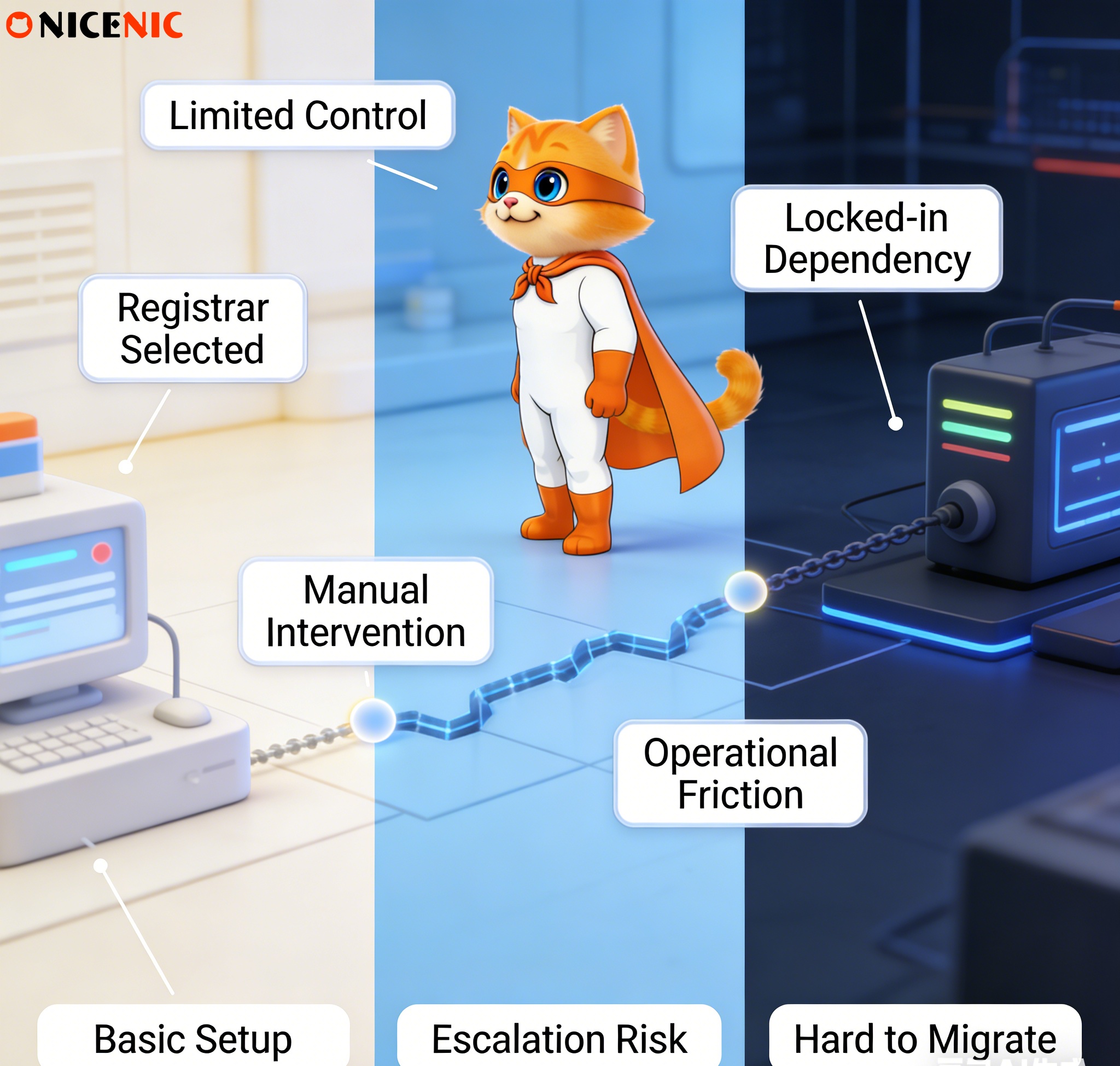
Choosing a domain registrar is often treated as a simple purchase decision.
The risks of choosing the wrong registrar rarely appear immediately. Instead, they accumulate quietly over time, often becoming visible only when something goes wrong.
1. Why Registrar Choice Matters More Than Many Expect
A domain is not just a website address. It is a foundational digital asset used for:
-
Websites and applications
-
Email and identity systems
-
Authentication and security workflows
-
Brand and intellectual property protection
Industry guidance consistently treats domain and DNS management as core digital infrastructure rather than a one-time transaction.
Many users select registrars based on low introductory pricing. While initial discounts can be attractive, they often mask:
-
Sharp renewal price increases
-
Add-on fees for basic security features
-
Limited long-term cost predictability
Such pricing models create budget and planning risk for long-term domain ownership.
-
Registrar-level domain locking
-
Protection against unauthorized transfers
Registrar Lock, for example, is specifically designed to prevent unauthorized domain changes.
2.3 Limited or Inflexible Support
When issues arise: DNS errors, abuse complaints, transfer problems, slow or purely automated support can allow minor issues to escalate into serious disruptions.
3. Long-Term Risks Created by the Wrong Registrar
3.1 Security and Abuse Risk
Domains managed without strong access controls are more vulnerable to:
-
Domain hijacking
-
DNS manipulation
-
Abuse misuse such as phishing or malware
Domain hijacking often exploits weak registrar security or account recovery processes.
3.2 Operational Risk and Service Disruption
Inconsistent DNS handling, poor tooling, or slow response times can lead to:
-
Website downtime
-
Email delivery failures
-
Unpredictable service behavior
Poor domain management practices are a known contributor to avoidable outages.
3.3 Compliance and Brand Risk
Registrars that do not handle WHOIS accuracy, abuse notifications, or policy alignment carefully can expose domain owners to:
-
Escalated abuse complaints
-
Registry enforcement actions
-
Reputational and legal exposure
These risks often surface only after prolonged use, making them harder to correct retroactively.
4. Common Misconceptions That Lead to Risk
| Common Assumption | Reality |
|---|---|
| All registrars are basically the same | Operational quality and safeguards vary widely |
| If it works now, it will work later | Many risks accumulate silently over time |
| Price equals value | Low cost often correlates with higher long-term risk |
5. How to Evaluate a Registrar for Long-Term Use
5.1 Security Capabilities
Look for registrars that provide:
-
2FA at the account level
-
Registrar Lock and transfer protection
-
DNS security options such as DNSSEC
5.2 Transparent Pricing and Renewals
A reliable registrar clearly discloses:
-
Renewal pricing
-
Transfer and restoration fees
-
Optional vs. required add-ons
Transparency reduces long-term financial surprises.
5.3 Professional Support and Escalation Paths
Long-term risk is often mitigated by timely, knowledgeable support, especially during DNS changes, abuse handling, or compliance inquiries.
5.4 Risk Allocation and Responsibility
6. Why These Risks Matter More for Growing Businesses and Enterprises
As organizations scale, domain portfolios expand. This amplifies:
-
Security exposure
-
Compliance obligations
-
Operational dependencies
A single registrar weakness can affect multiple services, brands, or regions simultaneously.
Before choosing a registrar, confirm:
-
Does it offer registrar-level domain locking?
-
Are 2FA and account security controls standard?
-
Are renewal prices clearly disclosed?
-
Is there responsive, human support for critical issues?
These checks help prevent avoidable long-term risk.
Treating registrar selection as an infrastructure decision, rather than a short-term purchase, helps domain owners reduce risk, avoid confusion, and minimize future support issues.
Why Trusted Registrar Infrastructure Matters
As an ICANN-accredited registrar, Nicenic operates within globally recognized policy frameworks and emphasizes stability, security, and predictable domain operations. Our Library content is designed to help domain owners understand long-term risk factors and make informed decisions that reduce avoidable issues.
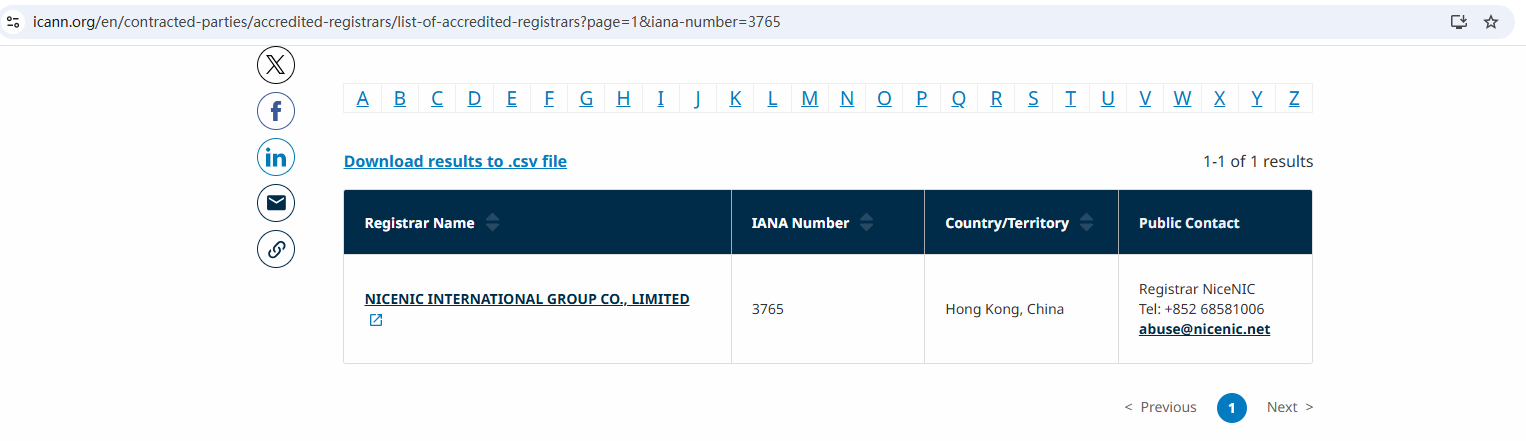
Nicenic stands as that trusted partner for brands, developers, entrepreneurs, and businesses worldwide.
???? ???: What Enterprises Actually Look for in a Domain Registrar