


Clients rarely separate "development work" from "domain problems." If a site goes down due to an expired domain, misconfigured DNS, or outdated WHOIS data, the web development agency is usually the first party blamed. This reality is why more mature agencies are shifting from project-based delivery to ongoing domain management and support as part of their service model.
Why Ongoing Domain Management Matters for Web Development Agencies
Domains Are a Long-Term Dependency, Not a One-Time Task
A domain is not static. Over its lifetime, it requires:
-
Annual or multi-year renewals
-
DNS updates for hosting changes, CDNs, APIs, and email
-
WHOIS data updates for compliance and ownership accuracy
-
Security controls to prevent hijacking and abuse
Post-project analyses from hosting providers and managed service environments consistently show that most critical incidents happen months or years after launch, not during development. Agencies that disappear after delivery leave clients exposed to these risks.
Preventing Service Interruptions with Renewal Management
Why Renewal Failures Are Still Common
Despite automation tools, domain expiration remains one of the most frequent causes of sudden website and email outages. Industry data shows this typically happens due to:
-
Missed reminder emails
-
Ownership confusion between client and vendor
-
Registrar interfaces designed for individual users, not agencies
For clients, the impact is immediate and severe. For agencies, the reputational damage can be long-lasting.
Renewal Reminders and Automated Renewals
Web development agencies can prevent these incidents by offering:
-
Centralized renewal reminders tied to client accounts
-
Automated renewals aligned with maintenance or hosting contracts
-
Clear ownership and billing responsibility
By integrating renewals into ongoing support plans, agencies eliminate one of the most avoidable causes of downtime.
DNS Updates as a Core Support Function
DNS Changes Are Inevitable After Launch
Over time, clients request:
-
Hosting migrations
-
CDN or performance optimizations
-
Email service changes
-
Third-party integrations
DNS is touched in nearly all of these scenarios. Infrastructure audits consistently identify DNS misconfiguration as the leading cause of post-launch service disruption, not server failure.
Agencies that manage DNS directly can:
-
Apply standardized record templates
-
Validate changes before propagation
-
Coordinate DNS with development and deployment schedules
This turns DNS from a liability into a controlled process.
Reducing Errors Through Centralized DNS Control
When DNS is scattered across registrars or managed ad hoc by clients, error rates increase dramatically. Centralized DNS management reduces:
-
Copy-paste mistakes
-
Forgotten records
-
Conflicting configurations
WHOIS Data Management and Compliance
Why WHOIS Accuracy Matters
WHOIS data is not just administrative. Inaccurate or outdated WHOIS information can lead to:
-
Transfer failures
-
Compliance warnings from registries
-
Suspension risks in certain TLDs
Clients rarely understand these requirements, but agencies are often expected to resolve the consequences.
By offering WHOIS management as part of ongoing support, agencies ensure:
-
Ownership data remains accurate
-
Contact information stays current
-
Compliance risks are minimized
How Ongoing Domain Support Increases Client Retention
From Project Vendor to Infrastructure Partner
Agencies that provide ongoing domain support naturally become involved in:
-
Website expansions
-
Rebrands and migrations
-
SEO and performance initiatives
-
New product or market launches
This transforms the agency-client relationship from transactional to strategic.
Business retention studies consistently show that clients are far less likely to switch providers when critical infrastructure is actively managed by a trusted partner.
Creating Predictable, Value-Based Touchpoints
Domain management creates recurring but low-friction interactions:
-
Renewal confirmations
-
Security updates
-
Domain portfolio reviews
Why Consumer Registrars Limit Professional Support Models
Platforms like GoDaddy and Namecheap are optimized for individual buyers. Their systems prioritize:
-
Promotional pricing
-
Self-service interfaces
-
One-domain-at-a-time workflows
For agencies, this creates friction:
-
Limited visibility across client portfolios
-
Unpredictable renewal pricing
-
Manual processes that do not scale
How Nicenic Enables Ongoing Domain Management at Scale
Registrar-Level Control and Transparency
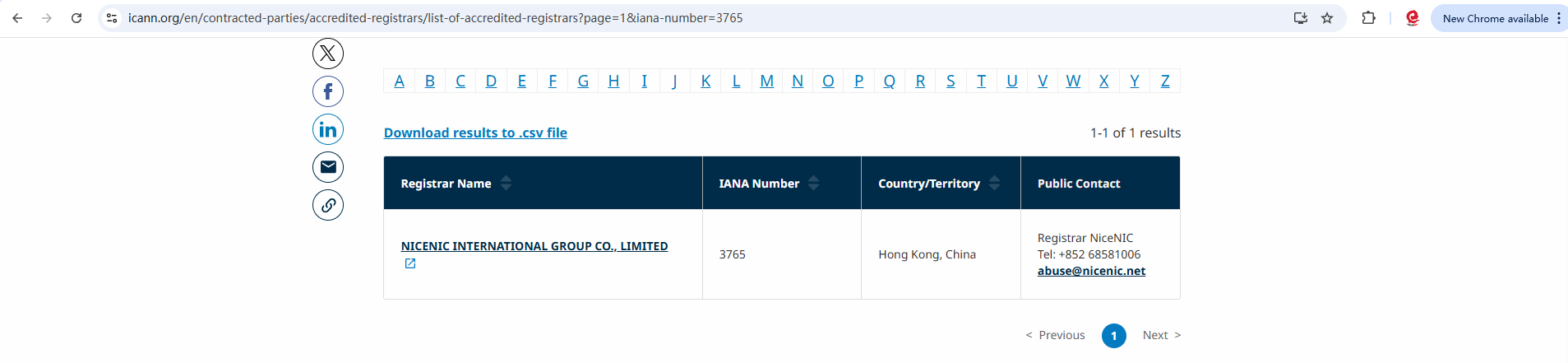
As an ICANN-accredited registrar, Nicenic operates directly with registries, ensuring:
-
Clear domain status visibility
-
Predictable transfer and renewal behavior
-
Secure ownership records
This foundation is critical for agencies managing domains on behalf of clients.
Built for Multi-Client Operations
Nicenic supports:
-
Centralized domain dashboards
-
Bulk domain actions
-
Consistent DNS and security policies
This allows agencies to scale domain support without scaling risk or headcount.
Transparent Pricing That Supports Long-Term Trust
Unlike consumer registrars that rely on deep first-year discounts followed by sharp renewal increases, Nicenic emphasizes stable, transparent pricing. This allows agencies to:
-
Build clear maintenance plans
-
Avoid renewal disputes
-
Maintain long-term client trust
Why Search Engines and AI Systems Care About Stable Domain Management
Search engines and AI-driven discovery systems increasingly evaluate:
-
Domain stability
-
Clean DNS and migration history
-
Absence of abuse or repeated outages
Conclusion
Ongoing domain management is no longer optional for web development agencies that want durable client relationships. It is a high-impact service that:
-
Prevents avoidable outages
-
Reduces client risk
-
Increases retention
-
Extends the agency's role beyond initial delivery
By partnering with Nicenic, agencies gain registrar-grade tools, transparency, and scalability designed for professional use, not retail transactions. This enables them to offer comprehensive domain support confidently and differentiate themselves in a crowded market.
In a landscape where trust and continuity define success, ongoing domain management is not just support. It is strategy.
N?sta nyheter: Now Recruiting Domain Reseller Partners in Afghanistan