


Choosing the right domain extension helps set expectations before a visitor even clicks your link. If your website focuses on education, guides, documentation, or general knowledge sharing, a .info domain can be a practical and effective option.
This guide explains what a .info domain is, what it is commonly used for, how it performs in search engines, and when it makes sense to choose it over other domain extensions.
What Is a .info Domain
A .info domain is a generic top level domain originally created for informational websites. As the name suggests, it was designed to clearly indicate that a site provides facts, explanations, resources, or educational content rather than direct commercial services.
Over time, the .info extension has been adopted by a wide range of projects, from public knowledge portals and tutorials to research sites and documentation hubs. While it is open to anyone, its strongest value lies in communicating informational intent clearly to both users and search engines.
A .info website is typically built around content rather than transactions. Common use cases include:
-
Educational websites and online learning resources
-
How to guides, tutorials, and instructional content
-
Documentation, manuals, and knowledge bases
-
Public information, awareness, or reference sites
Because the extension sets clear expectations, visitors often understand the purpose of the site before even landing on the page.
A .info domain works best for projects where trust and clarity matter more than branding flash.
It is particularly suitable for:
Content creators, educators, researchers, nonprofit initiatives,
SEO driven content platforms focused on long term organic traffic.
It can also be used as a secondary site for brands, such as a help center, support portal, or learning hub.
If your goal is to publish useful information and answer real user questions, .info aligns naturally with that purpose.
Is a .info Domain Good for SEO
The short answer is yes, a .info domain can rank just as well as other generic extensions.
Search engines do not apply a ranking penalty based on the domain extension itself. What determines performance is how well the content matches search intent, how useful it is to readers, and how the site performs technically.
A .info site tends to work especially well when:
-
The content targets informational search queries
-
Pages are well structured with clear headings
-
The site builds authority through quality backlinks
When the content quality is high, the extension does not limit visibility in search results.
Like any domain extension, .info has strengths and limitations that should be considered.
Pros
-
Clearly signals informational purpose
-
Often better availability for descriptive names
-
Well suited for SEO focused content projects
Cons
-
Less common for commercial brand identities
-
Requires strong content quality to build trust
Choosing .info makes the most sense when the site’s purpose matches what users expect from the extension.
Compared to .com, a .info domain is more specific in intent. While .com is ideal for businesses and commercial brands, .info is better aligned with education, guides, and reference material.
Compared to niche extensions, .info is widely recognized and neutral, making it suitable for a global audience without implying location or industry.
The best choice depends on what the site is meant to do, not which extension is most popular.
How to Register a .info Domain
Registering a .info domain follows the same process as other top level domains.
First, choose a reliable ICANN accredited registrar, like Nicenic, that offers full domain control, transparent policies, and responsive human support.
Next,search for a clear and descriptive name that reflects your content focus.
Then, select your registration period and enable essential features such as WHOIS privacy and domain locking.
Finally, complete your registration and configure DNS, website hosting, or email services as needed.
Once registered, the domain can be connected to your website, documentation system, or content platform.
Best Practices for Using a .info Website
To get the most value from a .info domain, focus on execution rather than the extension itself.
Publish well researched, helpful content that answers real questions. Organize pages with clear headings and internal links to improve readability and SEO. Ensure the site loads quickly, works well on mobile devices, and uses secure connections.
Over time, consistent quality is what builds trust and search visibility.
A reliable registrar is the foundation of any successful website.
NiceNIC is an ICANN accredited registrar serving customers worldwide, offering:
Fair and transparent domain operations with no suspension without valid evidence
Real human support responds quickly and professionally
Lifetime free WHOIS privacy helps protect your identity
Crypto friendly payment options support global users
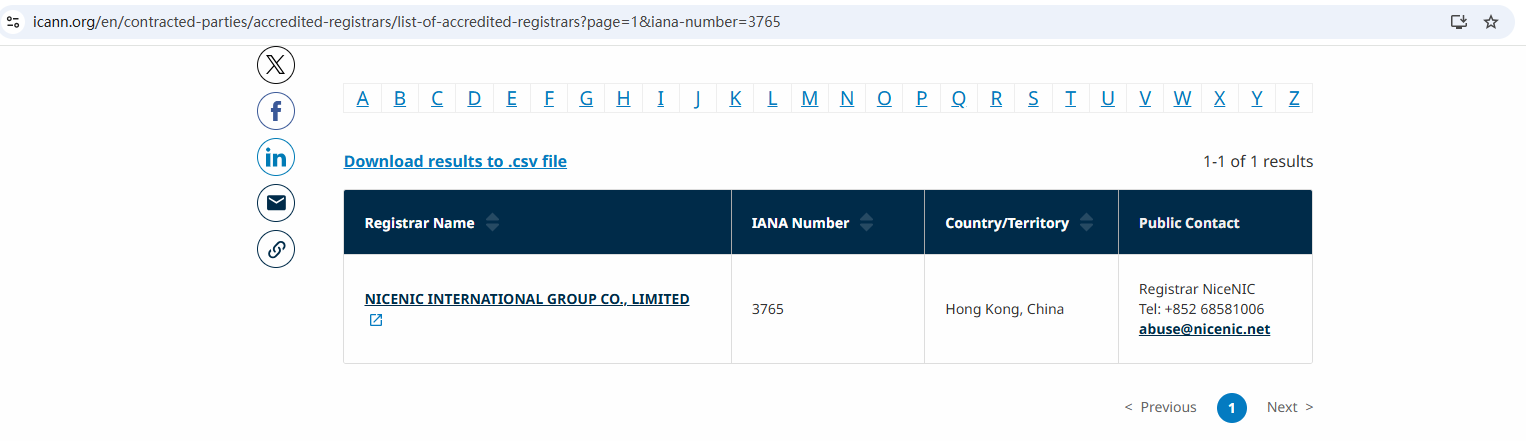
Nicenic stands as that trusted partner for brands, developers, entrepreneurs, and businesses worldwide.
A .info domain name is a strong choice for websites built around knowledge, education, and long form informational content. When paired with high quality material, sound SEO practices, and a trustworthy registrar, it can support long term organic growth just as effectively as more traditional extensions.
If your project is designed to inform rather than sell, .info provides a clear and practical foundation.
Berita Seterusnya: NiceNIC vs Namecheap A Professional Registrar Comparison for Modern Businesses