



Why DNS Configuration Matters for SEO
DNS Is the First Step in Every Page Load
Before a browser can request HTML, CSS, or JavaScript, it must resolve the domain through DNS. Performance research from web infrastructure providers consistently shows that slow or unreliable DNS resolution increases total page load time, especially for first-time visitors.
Search engines evaluate:
-
Page speed and Core Web Vitals
-
Crawl efficiency and server responsiveness
-
Site availability and stability
DNS sits upstream of all of these signals.
DNS Errors Create Invisible SEO Damage
SEO audits across large sites frequently uncover:
-
Incorrect A or CNAME records
-
Legacy MX records affecting email and trust
-
Misconfigured subdomains blocking crawlers
These issues often do not trigger visible errors but result in:
-
Slower crawl rates
-
Delayed indexing after changes
-
Reduced reliability signals
Ensuring DNS Records Are Configured Properly
A Records and CNAME Records
Correct A and CNAME configuration ensures that:
-
The correct server responds to search engine crawlers
-
CDN routing works as expected
-
Canonical domains resolve consistently
Misconfigured records can split crawl signals across multiple endpoints or cause intermittent resolution failures. Professional DNS management reduces this risk.
With Nicenic, SEO agencies can manage DNS records through a registrar-grade interface designed for accuracy rather than upsell-driven complexity.
MX Records and SEO Trust Signals
While MX records do not directly affect rankings, email deliverability plays an indirect role in SEO trust. Sites associated with spam or misconfigured email systems often experience:
-
Brand trust erosion
-
Increased abuse reports
-
Reduced engagement signals
Using TTL Strategically for SEO Operations
Why TTL Values Matter
Time To Live (TTL) determines how long DNS records are cached. Infrastructure studies consistently show that TTL strategy is critical during SEO-impacting changes, such as:
-
Hosting migrations
-
CDN adoption
-
HTTPS or domain transitions
High TTL values slow propagation, while excessively low TTL values can increase resolver load.
Best Practices for SEO Agencies
SEO agencies can optimize TTL by:
-
Temporarily lowering TTL before planned changes
-
Restoring stable TTL values after migration
-
Coordinating TTL strategy with hosting and CDN teams
This approach reduces downtime risk and ensures faster search engine recognition of updates.
DNS Performance and Page Speed
DNS and Core Web Vitals
Performance research confirms that DNS latency contributes to:
-
Time to First Byte (TTFB)
-
Largest Contentful Paint (LCP) for first visits
While DNS is only one component, it is a foundational dependency. Optimized DNS improves the baseline performance on which all other speed optimizations rely.
Security, DNS, and SEO Stability
DNS Security Is an SEO Safeguard
DNS-related attacks such as hijacking or cache poisoning can:
-
Redirect traffic to malicious pages
-
Trigger search engine warnings
-
Cause long-term ranking damage
Search engines treat security incidents as trust failures, and recovery can take months.
Nicenic provides registrar-level security controls, including:
-
Secure DNS management
-
Registrar locks
How Nicenic Supports SEO Agencies
Built for Professional DNS Management
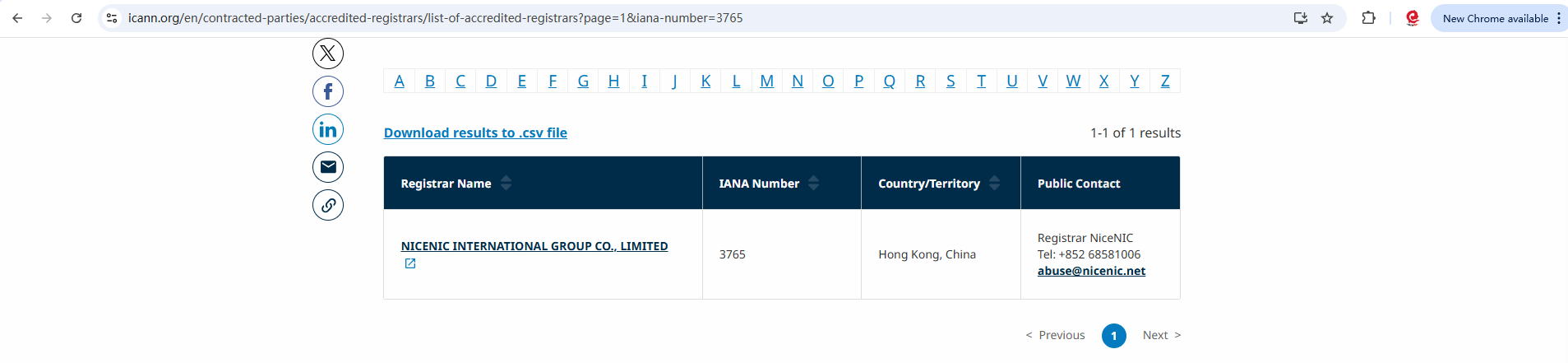
Nicenic is an ICANN-accredited registrar, operating directly with registries. This ensures:
-
Accurate domain resolution
-
Stable DNS operations
-
Clean ownership and lifecycle signals
API and Scalable DNS Control
SEO agencies operating at scale benefit from automation. Nicenic enables:
-
Programmatic DNS updates
-
Consistent record templates
-
Monitoring across multiple domains
This allows agencies to integrate DNS into technical SEO workflows rather than treating it as a manual task.
Transparent Infrastructure Without Retail Noise
Unlike GoDaddy and Namecheap, which prioritize consumer funnels and upsells, Nicenic focuses on:
-
Infrastructure reliability
-
Predictable operations
-
Professional use cases
Why Search Engines and AI Systems Favor Proper DNS Management
Search engines and AI-driven discovery systems increasingly evaluate:
-
Domain stability
-
Clean resolution history
-
Absence of abuse or misconfiguration
Proper DNS management supports:
-
Faster crawling
-
More reliable indexing
-
Stronger trust signals
Conclusion
DNS is not just a technical setting. It is a strategic SEO layer that influences speed, stability, security, and search trust.
SEO agencies that optimize DNS by:
-
Ensuring accurate record configuration
-
Managing TTL intelligently
-
Securing DNS infrastructure
Gain measurable advantages in performance and reliability.
By partnering with Nicenic, SEO agencies access registrar-grade DNS control, security, and scalability — enabling them to deliver more predictable SEO outcomes and differentiate themselves from competitors limited by consumer-focused registrars.
In modern SEO, DNS optimization is no longer optional. It is a competitive edge.
Nākamās zi?as: Streamlining Your Web Development Workflow with Domain Registration Automation