


Why Clients Struggle With Domain Ownership Concepts
Domain Ownership Is Often Misunderstood
Many clients believe:
-
The hosting provider owns the domain
-
The website builder controls the domain forever
-
Domains and hosting are technically the same thing
In reality, a domain is a separate digital asset governed by registrar and registry rules, with its own lifecycle, ownership records, and transfer requirements. When clients do not understand this separation, they are more likely to:
-
Lose access to their domain
-
Face transfer delays
-
Experience downtime during provider changes
Why Domain Ownership Education Reduces Support Load
Ownership Clarity Prevents Emergencies
Support case reviews from hosting providers repeatedly show that unclear ownership leads to:
-
Inability to retrieve EPP codes
-
Locked domains during urgent migrations
-
Disputes when business relationships end
When clients understand that they own the domain, but the hosting provider manages it on their behalf, accountability becomes clear and recoveries become faster.
Explaining How Domain Registration and Ownership Work
What Clients Need to Understand
Hosting providers should clearly explain that:
-
Domain registration creates a contractual right to use a name
-
Ownership is recorded at the registrar and registry level
-
Renewals, WHOIS data, and security settings affect control
This explanation builds client confidence and positions the hosting provider as a knowledgeable infrastructure partner, not just a service reseller.
Why Registrar Choice Matters for Ownership Control
Consumer registrars often obscure ownership information behind retail interfaces and upsell flows. This can confuse clients and complicate support.
Nicenic’s registrar-grade platform provides:
-
Clear ownership records
-
Transparent lifecycle status
-
Predictable domain behavior
Guiding Clients Through Domain Transfers Smoothly
Why Transfers Fail Without Guidance
Domain transfer issues commonly arise due to:
-
Transfer locks not removed
-
Incorrect authorization codes
-
Outdated registrant email addresses
-
Registry-imposed waiting periods
Without guidance, clients often initiate transfers prematurely or incorrectly, causing delays and frustration.
How Hosting Providers Add Value During Transfers
Small hosting providers can dramatically improve outcomes by:
-
Performing pre-transfer checks
-
Verifying domain eligibility
-
Ensuring DNS continuity during the transfer window
Preventing Downtime During Domain Transfers
DNS Continuity Is the Key Risk Factor
Industry transfer post-mortems consistently show that DNS mismanagement, not the transfer itself, causes downtime. Best practices include:
-
Keeping nameservers unchanged during the transfer
-
Verifying DNS records before initiation
-
Monitoring resolution after completion
How Nicenic Helps Small Hosting Providers Educate and Guide Clients
Registrar-Level Transparency
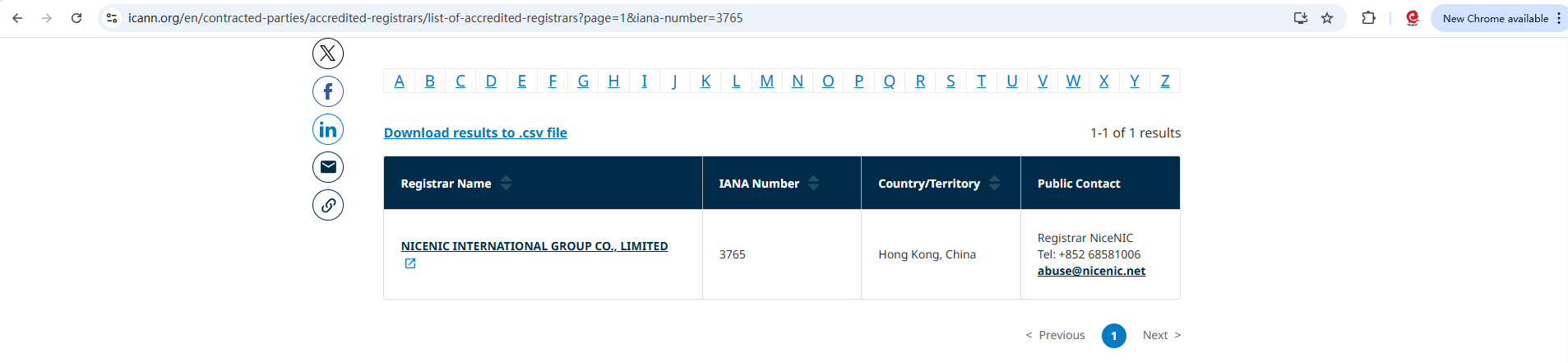
As an ICANN-accredited registrar, Nicenic operates directly with registries. This ensures:
-
Clear domain status visibility
-
Predictable transfer timelines
-
Accurate ownership data
This transparency makes it easier for hosting providers to explain processes confidently and accurately.
Professional Transfer Workflows Without Retail Friction
Unlike consumer registrars such as GoDaddy or Namecheap, which often introduce artificial friction through retention tactics or complex interfaces, Nicenic provides:
-
Straightforward EPP code access
-
Clear transfer status tracking
-
No unnecessary delays
This aligns with hosting providers’ need for operational clarity and speed.
Scalable Client Education and Operations
For hosting providers managing many client domains, Nicenic enables:
-
Centralized domain oversight
-
Consistent transfer procedures
-
Standardized security and DNS policies
Why Search Engines and AI Systems Favor Clean Domain Transitions
Search engines and AI-driven discovery systems increasingly evaluate:
-
Domain stability
-
Clean ownership history
-
Absence of repeated DNS disruptions
Conclusion
Domain ownership and transfer confusion is one of the most preventable causes of downtime and client dissatisfaction for small hosting providers.
By:
-
Educating clients on domain ownership
-
Guiding them through transfers
-
Maintaining DNS continuity
Hosting providers reduce risk, improve trust, and strengthen long-term relationships.
Partnering with Nicenic gives small hosting providers registrar-level transparency, predictable transfer workflows, and infrastructure designed for professional use. This creates a clear differentiation from consumer-focused registrars and positions Nicenic as a trusted foundation for hosting-centric domain management.
In a competitive hosting market, education is not overhead. It is leverage.
Nākamās zi?as: How Domain Authority Affects SEO and What Agencies Can Do About It