



When choosing a domain registrar, many users focus on price, features, or promotional offers.
In digital infrastructure markets, scale is not just about size. It is closely tied to operational stability, institutional experience, and collective trust. This article explains why registrar market share functions as a trust signal, how it reduces uncertainty for domain owners, and how to interpret it correctly when making long-term decisions.
Market Share Is Not Marketing, It Reflects Operational Reality
Market share, in simple terms, refers to the proportion of domains managed by a registrar relative to the total number of registered domains globally.
The global domain name ecosystem now includes hundreds of millions of active domain names, indicating a mature and highly distributed infrastructure market.
In such an environment, registrars managing large portfolios must demonstrate sustained operational capability over long periods not just short-term growth.
Why Scale Often Correlates With Stability
1. Proven Operational Capacity
Registrars with significant market share typically operate at scale across:
-
DNS management systems
-
Domain lifecycle automation (registration, renewal, transfer)
-
Security and access controls
-
Uptime and business continuity processes
Managing millions of domains requires systems that are resilient, monitored, and continuously improved. This level of infrastructure maturity is difficult to sustain without long-term operational investment.
The overall registrar market has evolved toward fewer but more capable operators as scale requirements increase.
Large registrars usually have:
-
Longstanding accreditation history
-
Deep experience working with multiple registries
-
Familiarity with policy updates and procedural changes
This matters because registry policies, technical standards, and compliance requirements evolve over time. Registrars with scale are more likely to adapt smoothly without disrupting customer domains.
3. Mature Compliance and Abuse Response Workflows
Handling abuse reports, verification requests, and compliance inquiries is not optional, it is a core registrar responsibility.
Registrars managing large volumes of domains are continuously exposed to:
-
Abuse reports
-
Data accuracy checks
-
Security incidents
As a result, they tend to develop structured, repeatable workflows to handle these issues consistently. This reduces the likelihood of ad-hoc decisions, delayed responses, or unclear communication, all common causes of customer confusion and support tickets.
Industry analysis shows that registrars compete not only on price, but on process maturity and operational reliability as markets consolidate.
The Behavioral Psychology Behind Market Share as a Trust Signal
From a customer’s perspective, registrars are difficult to evaluate technically. Most users cannot inspect backend systems, registry integrations, or internal controls.
In these situations, decision-making relies on two well-established behavioral principles:
Social Proof
When a large number of users trust a provider, that collective behavior becomes a signal in itself.
In practice, market share functions as visible social proof:
"If many organizations rely on this registrar for critical domains, it is likely to be reliable."
Risk Minimization
Domain names often support:
-
Core websites
-
Business email
-
Authentication and verification systems
For mission-critical infrastructure, users naturally prioritize lower perceived risk over marginal cost savings. Market share becomes a proxy for reduced uncertainty when direct technical evaluation is not possible.
It is important to clarify a common misunderstanding.
Market share does not mean:
-
Smaller registrars are inherently unreliable
-
Larger registrars never experience issues
Many smaller providers offer excellent service within specific niches.
However, without scale, they lack the collective trust signal that comes from managing large, diverse domain portfolios over time. For high-impact domains, this distinction matters.
Rather than asking "Who is the biggest?", domain owners should ask:
-
Does this registrar demonstrate long-term presence in the market?
-
Is it recognized as part of the mainstream registrar ecosystem?
-
Does it operate within established industry frameworks?
-
Does its scale suggest mature processes rather than ad-hoc operations?
Market share should be treated as one input, but an important one when balancing cost, features, and risk tolerance.
Why This Matters for Mission-Critical Domains
Domains tied to:
-
Brand identity
-
Revenue-generating websites
-
Business email
-
Authentication or API endpoints
carry asymmetric risk. The cost of failure often far exceeds the cost of registration.
For these use cases, registrars with demonstrable scale and longevity are consistently preferred not because they are perfect, but because they reduce single-point failure risk and operational uncertainty.
Why Trusted Registrar Guidance Matters
As an ICANN-accredited registrar, Nicenic operates within established global frameworks designed to ensure stability, accountability, and long-term domain stewardship. Our Library content is built to help customers understand how structural signals, such as market presence and operational scale translate into real-world reliability.
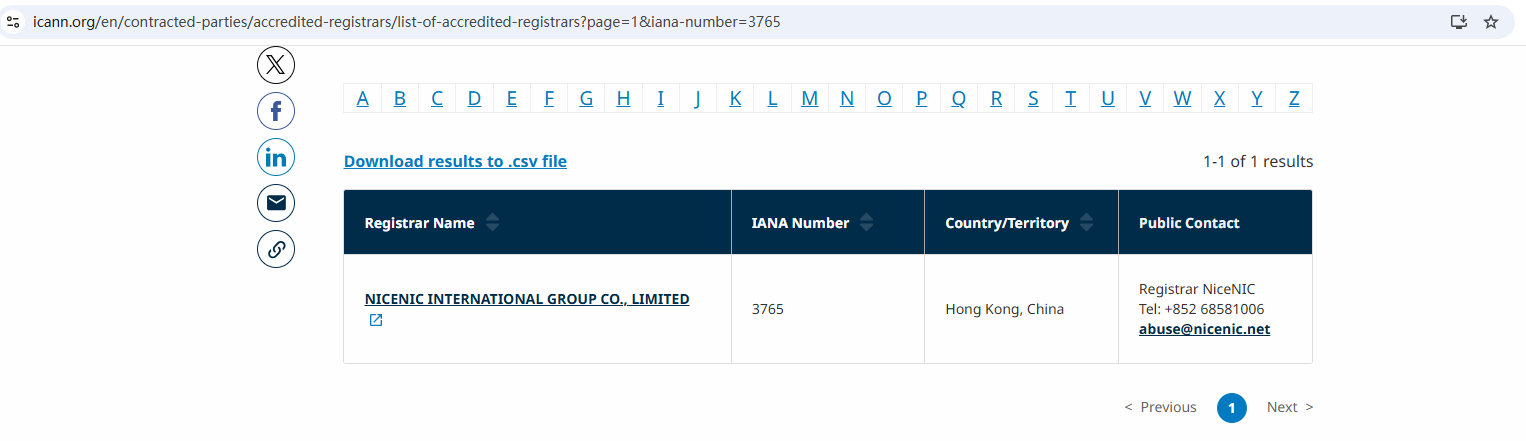
Nicenic stands as that trusted partner for brands, developers, entrepreneurs, and businesses worldwide.
Next News: How to Use Google Search Console’s Change of Address Tool for Your Site Move