



Introduction: Why .exchange Domains Matter
As digital businesses become more specialized, domain names are increasingly used to communicate purpose, not just identity. For platforms focused on trading, swapping, transferring, or sharing value, clarity is essential. This is where .exchange domains stand out.
Rather than relying on generic extensions, many organizations now choose a domain that directly reflects what they do. A .exchange web domain immediately signals activity related to exchange, whether that involves goods, services, data, or financial value. This guide explains what the .exchange extension is, who it is designed for, how it works, and how to use it effectively.
What Is a .exchange Domain?
A .exchange internet domain is a generic top-level domain introduced to support websites and platforms built around exchange-based activities. It is not limited to a single industry or geography and is open to registration worldwide.
The term "exchange" is widely understood across sectors, which makes .exchange domain names especially suitable for businesses that want their purpose to be immediately clear to users and partners.
The Origin and Scope of the .exchange TLD
The .exchange TLD was launched as part of the expansion of new generic top-level domains, aimed at creating more descriptive and meaningful naming options on the internet.
Since its introduction, domain .exchange has been adopted across a wide range of industries, including:
-
Financial services and trading platforms
-
E-commerce and service marketplaces
-
Technology and data-sharing platforms
-
Community and resource-exchange networks
-
Business-to-business service portals
The flexibility of the .exchange domain TLD allows it to support both large platforms and niche, specialized services.
Clear Purpose and Positioning
A .exchange web domain makes the function of a website immediately understandable. This reduces ambiguity and helps attract users who are actively looking for exchange-related services.
Strong Industry Relevance
For businesses operating in finance, commerce, technology, or services, the word “exchange” carries established meaning. Using it directly in the domain reinforces relevance and credibility.
Improved Name Availability
Compared to heavily saturated extensions, .exchange domain names often offer better availability, making it easier to secure concise and brand-aligned names.
Flexibility Across Use Cases
Although commonly associated with financial exchanges, the extension is equally effective for platforms focused on information sharing, service matching, digital assets, or resource transfers.
.exchange vs Traditional Domain Extensions
When comparing .exchange domains with traditional options such as .com or .net, the difference lies in communication rather than functionality.
-
Traditional extensions are broad and neutral
-
.exchange domains add semantic meaning and context
From an SEO perspective, search engines do not favor one extension over another by default. Rankings depend on content quality, relevance, performance, and user experience. However, a domain that aligns closely with user intent can improve clarity and engagement.
How to Register and Use .exchange Domain Names
Who Can Register?
There are no geographic or industry restrictions. Individuals, startups, and organizations worldwide can register .exchange domain names.
Basic Registration and Setup Steps
-
Choose an ICANN-accredited registrar
-
Search for an available domain .exchange
-
Complete registration and ownership verification
-
Configure DNS records
-
Connect the domain to your website, platform, or email services
Once configured, a .exchange internet domain functions like any modern gTLD and supports standard web and email infrastructure.
Common Questions About .exchange Domains
Q: Are .exchange domains only for financial platforms?
No. While popular in finance and trading, they are also widely used for services, marketplaces, and information-exchange platforms.
Q: Do .exchange domains affect SEO?
The extension itself does not determine rankings. SEO success depends on content quality, relevance, and optimization.
Q: Are .exchange domains considered professional?
Yes. When used appropriately, they can strengthen clarity, positioning, and brand credibility.
Register Your .exchange Domain with Nicenic
Selecting a reliable registrar is essential for managing specialized domain extensions. Nicenic is an ICANN-accredited registrar, providing secure, compliant, and globally accessible domain registration services.
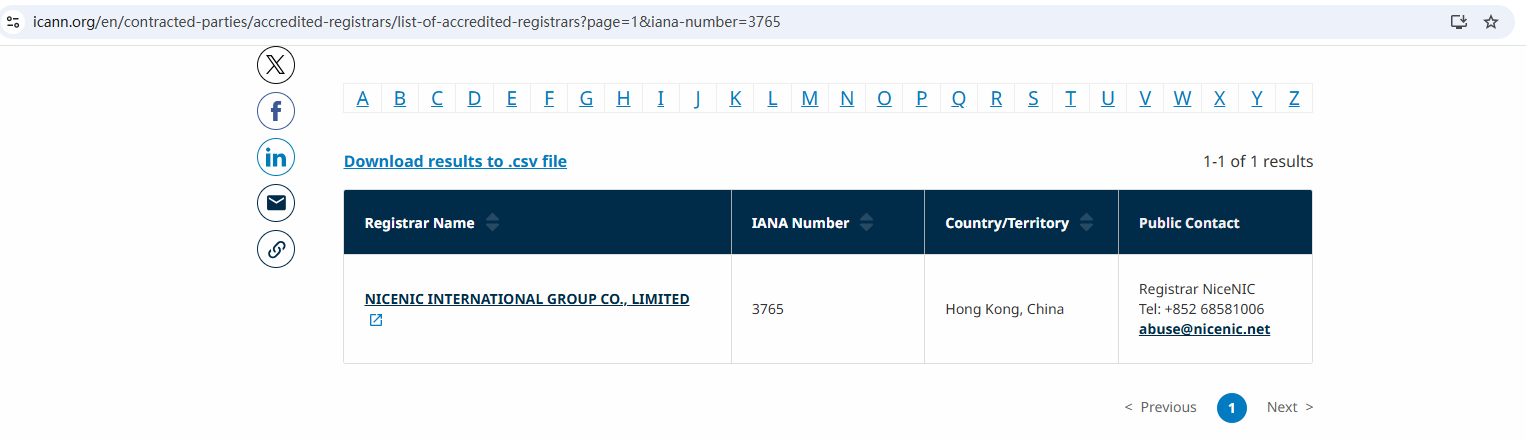
With professional domain management, transparent policies, and international support, Nicenic helps businesses and platforms operate with confidence across borders and industries.
Nicenic stands as that trusted partner for brands, developers, entrepreneurs, and businesses worldwide.
Next News: Is a .cc Domain Good for Startups, Creative Brands, and Global Businesses in 2025?