

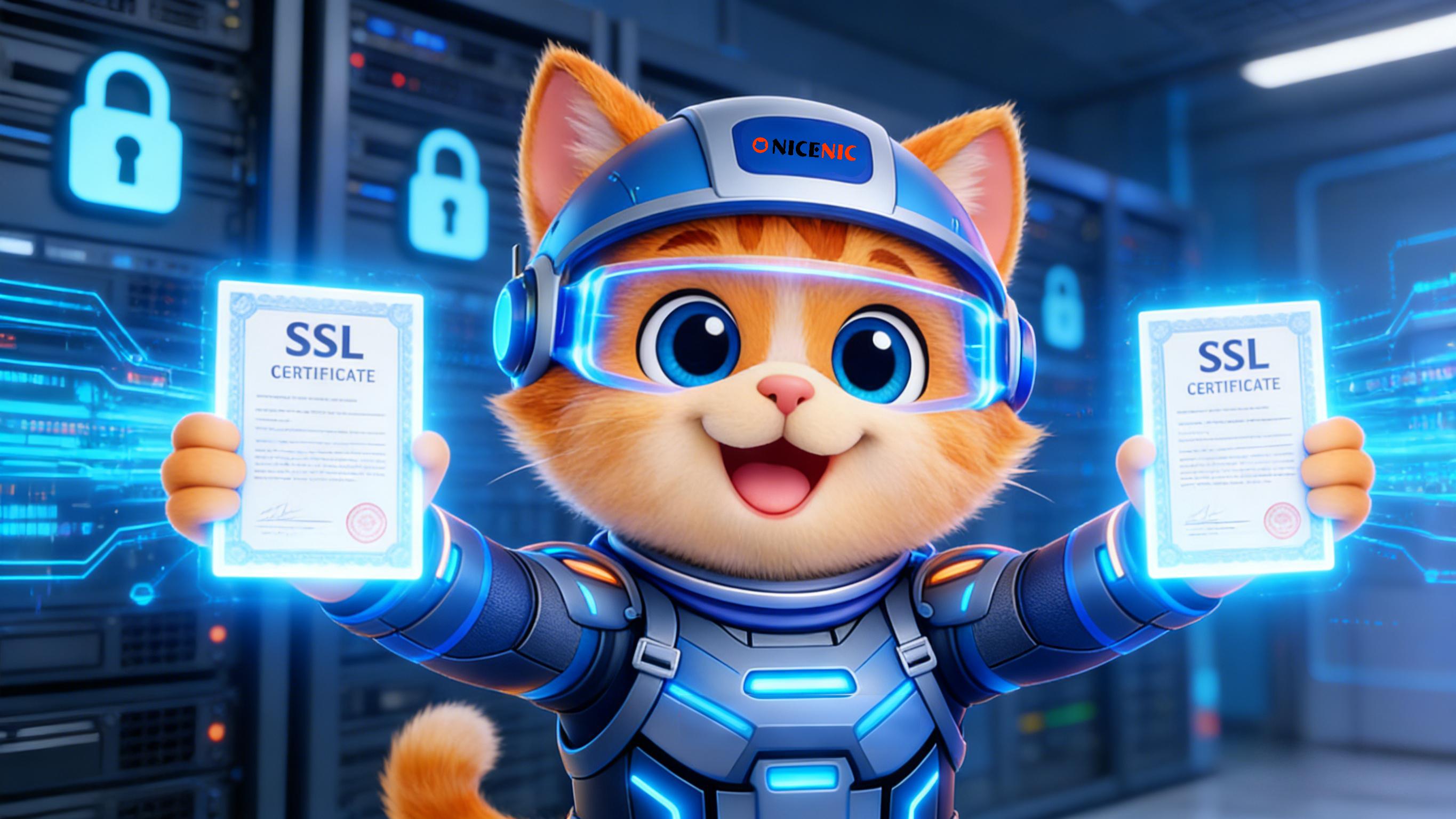
If you run a website, you need an SSL certificate. It helps turn HTTP into HTTPS, protects data sent between the visitor and the server, reduces browser trust warnings, and supports a more secure experience for logins, forms, and online transactions. At NiceNIC, we make SSL Certificates easier to choose, activate, install, and manage for personal sites, business websites, and ecommerce projects.
This matters because HTTPS is now the web standard, not an optional extra. HTTP Archive’s 2025 Web Almanac reports that 97.3 percent of mobile homepages use HTTPS, and TLS 1.3 powers roughly 76 percent of web pages. If your website still lacks HTTPS, it can look outdated and less trustworthy to both users and modern browsers.
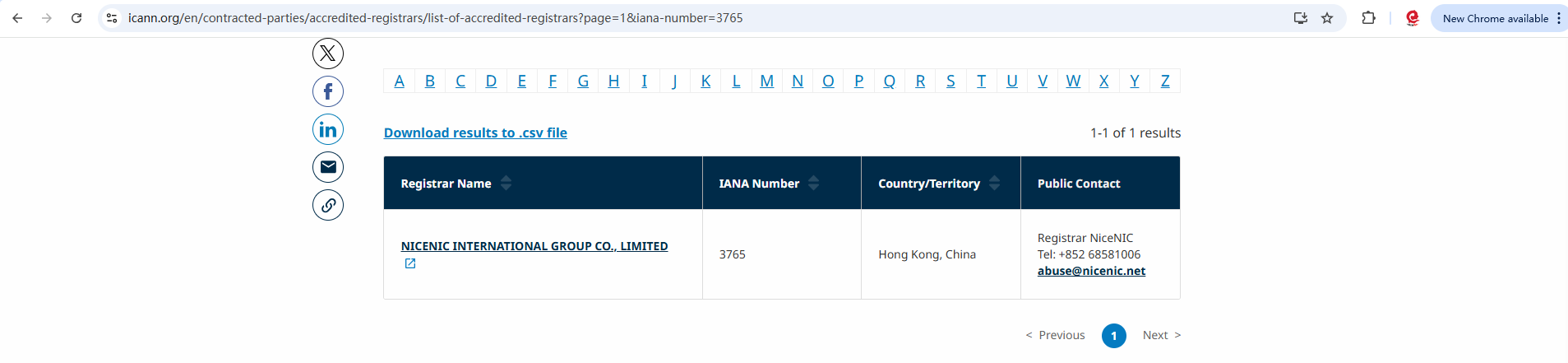
At NiceNIC, we combine SSL products from major global brands with the operational stability of an ICANN accredited registrar founded in 2006. We serve clients in over 100 countries and provide secure, transparent domain services, SSL certificates, business email, and related website infrastructure from one place.
What Are SSL Certificates?
SSL Certificates are digital certificates issued by a Certificate Authority to verify a website and encrypt the connection between the browser and the server. In daily use, people often still say SSL, even though modern secure connections rely on TLS. The practical result is the same for most users: your website shows HTTPS, data is encrypted in transit, and visitors can interact with your site more confidently.
Here is the simple definition.
An SSL certificate helps prove that a visitor is connecting to the intended website, and it helps protect information such as passwords, contact form submissions, account details, and checkout data while it moves across the network. When Firefox detects a login page without HTTPS, it warns users because passwords entered on an insecure page could be seen or stolen by others.
A useful example is this.
If your site has a login page, customer dashboard, quote request form, or payment step, HTTPS is no longer just a technical improvement. It is part of the trust layer users expect before they continue.
Why SSL Certificates Matter for Modern Websites
1. They protect trust at the first click
Users notice security signals quickly. If a site looks insecure, many visitors leave before reading your offer, filling out a form, or placing an order. Browsers actively warn users when login pages are not protected by HTTPS, which means SSL directly affects trust, bounce risk, and user confidence.
2. They support search visibility and indexing
Google has used HTTPS as a ranking signal and also states in Search Console documentation that it strongly recommends HTTPS for user security and privacy. If a page exists in both HTTP and HTTPS versions, Google prefers to index the HTTPS version. That does not mean SSL alone will make weak content rank, but it removes a credibility problem and aligns your website with baseline search expectations.
3. They support modern web features
MDN explains that many Web APIs and features are available only in secure contexts. Service workers are available only when the page is in a secure context, which is one reason HTTPS matters for performance features, progressive web app behavior, and a more modern site experience.
4. They fit the way the web works today
The broader internet has already moved to HTTPS at scale. That means visitors, search engines, browsers, and platforms increasingly assume security by default. A site without SSL stands out for the wrong reason.
How SSL Certificates Work with Your Domain, DNS, and Registrar
An SSL certificate is not the same thing as a domain name. Your domain is registered through a registrar. The domain extension itself belongs to a registry. WHOIS records show registration related details, and DNS records help route traffic to the right service. SSL sits on top of that setup and secures the website connection once the certificate is properly issued and installed.
This is why SSL works best when your website domain, DNS, and security services are managed in a coordinated way. At NiceNIC, customers can manage domains, DNS, SSL Certificates, business email, and related services in one account, which reduces friction compared with workflows where SSL is scattered across separate providers.
How to Choose the Right SSL Certificate at NiceNIC
1. Start with the right validation level
DV SSL Certificate
Domain Validation, or DV, is the fastest and simplest option. On our SSL page, DV certificates are positioned as a strong fit for personal websites. Our listed DV products include support for 2048 bit RSA keys, encryption up to 256 bit, browser support up to 99.9 percent on listed products, free unlimited reissues on listed products, and starting prices from USD 12.99 per year for entry DV options shown on the page.
Choose DV when you need HTTPS quickly for a blog, landing page, portfolio, startup site, or simple business website.
OV SSL Certificate
Organization Validation, or OV, is more suitable for established business websites. On our SSL page, OV is described as great for business and offers a higher assurance level than DV. Listed OV products on our page start from USD 116.99 per year and are designed for organizations that want stronger validation around business identity.
Choose OV when your site handles leads, customer accounts, internal dashboards, or other forms of business sensitive interaction.
EV SSL Certificate
Extended Validation, or EV, is designed for websites that need the highest level of validation in this lineup. On our SSL page, EV is positioned as great for ecommerce, with very high assurance and listed entry pricing from USD 153.99 per year.
Choose EV when trust is central to the transaction, especially for ecommerce, financial workflows, premium brand sites, or customer sensitive operations.
2. Choose how many domains or subdomains you need to secure
Single Domain SSL
Use this when you want to secure one website domain, such as example.com and www.example.com. This is often the cleanest choice for a single brand site or corporate homepage.
Wildcard SSL
Use this when you need to protect multiple subdomains under one root domain, such as shop.example.com, mail.example.com, and support.example.com. On our SSL page, wildcard options are available across DV and OV product categories.
Multi Domain SSL
Use this when you manage several separate domain names in one certificate. On our SSL page, multi domain options are available for DV, OV, and EV products, with listed products including additional domain support depending on the plan.
3. Consider lifecycle management, not just purchase price
At many registrars, the real friction starts after checkout. Validation steps can be unclear. Installation guidance may be limited. Renewal tracking may be scattered. Reissuance can become a support issue instead of a routine workflow.
At NiceNIC, our SSL page is built around a practical four step flow: Buy It, Activate It, Install It, and Manage It. We state clearly that installation instructions are sent after activation, and certificates can be managed through the account panel for renewal and reissuance. That structure matters because certificate validity periods are becoming shorter under CA Browser Forum rules. Subscriber certificate maximum validity moved to 200 days from March 15, 2026, then to 100 days from March 15, 2027, and is set to fall to 47 days from March 15, 2029. The operational side of SSL now matters more than ever.
Why NiceNIC Is a Practical SSL Solution
NiceNIC is not just a storefront for certificates. We are an ICANN accredited registrar serving global users with secure and transparent domain management, SSL certificates, and related website services. That matters because SSL does not live in isolation. It works best when your registrar, DNS control, WHOIS management, and website security setup work together smoothly.
Our SSL page brings together major global certificate brands in one place, including GlobalSign, DigiCert, GeoTrust, Sectigo, Thawte, Entrust, and others. For customers, that means clearer comparison, easier selection by validation type and coverage type, and a more stable path from purchase to activation.
For businesses comparing providers, the issue is often not whether an SSL certificate exists, but whether the buying and management process is predictable. Some registrars make SSL feel like an add on. We treat it as part of a secure website foundation. That is a more practical model for global users who want security, operational clarity, and long term control.
FAQ
1. Do I need an SSL certificate if my website is not an online store?
Yes. If your site has a login, contact form, account area, lead form, or any page where users send data, SSL is still important. Browsers warn users on insecure login pages, and Google recommends HTTPS for user security and privacy.
2. What is the difference between DV, OV, and EV SSL certificates?
DV verifies domain control and is usually the fastest to issue. OV adds organization level validation and is better for business websites. EV provides the highest validation level in this product lineup and is a stronger fit for ecommerce or high trust environments.
3. What is the difference between single domain, wildcard, and multi domain SSL?
Single domain secures one website domain. Wildcard secures one domain plus its subdomains. Multi domain secures multiple separate domain names under one certificate, depending on product limits.
4. Can SSL help SEO?
SSL is not a magic ranking shortcut, but HTTPS is a confirmed Google ranking signal and part of a trustworthy modern website setup. It also helps avoid the credibility problems that come with insecure browser warnings.
5. Why buy SSL Certificates from an ICANN accredited registrar like NiceNIC?
Because security works better when your domain, DNS, WHOIS related controls, and SSL management are coordinated. As an ICANN accredited registrar, we operate to recognized standards for data security, customer protection, and transparent domain operations.
6. Can I manage renewal and reissuance inside NiceNIC?
Yes. On our SSL page, we explain that after activation and installation, you can manage your certificates through the NiceNIC account panel, including renewal and reissuance.
Secure Your Website with NiceNIC
If you want a faster, clearer way to secure your website, start with the SSL certificate type that matches your real use case. Choose DV for speed, OV for business validation, or EV for stronger ecommerce trust. If you manage multiple sites or subdomains, choose wildcard or multi domain coverage based on your structure.
At NiceNIC, we help you do more than just buy SSL Certificates. We help you connect website security with domain management, DNS control, and long term operational stability through one trusted platform. Explore our SSL Certificates page, compare the options, and choose the certificate that fits your website today.