

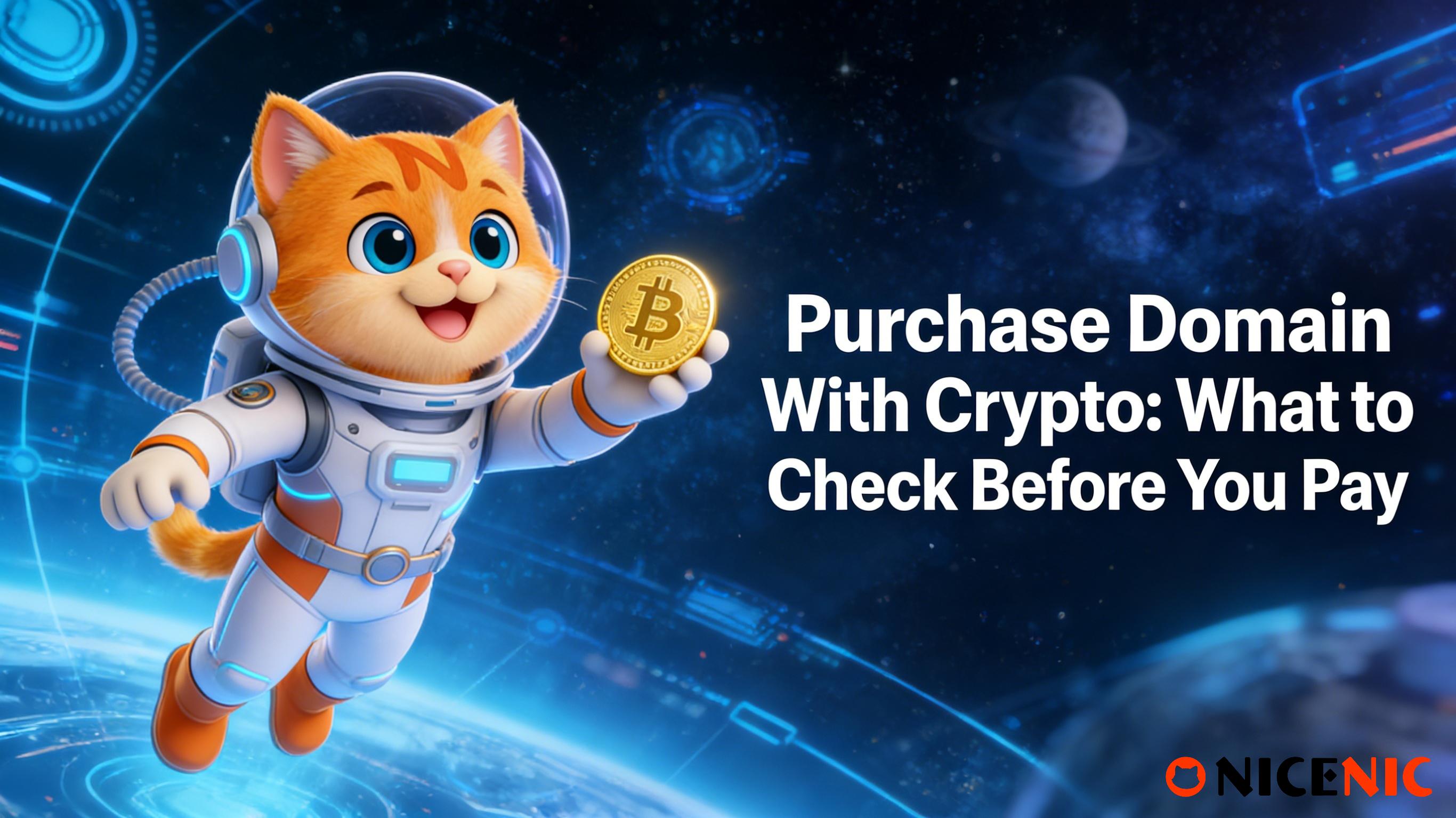
You can purchase domain with crypto safely and quickly. But the smart way to do it is not to start with payment. Start with a domain name search, a domain check, and a review of the registrar behind the sale. If you skip those steps, you may end up with the wrong website domain name, the wrong TLD, or a registrar that is hard to trust.
If your goal is to buy domain with crypto for a real business, you need more than a checkout page. You need a clear process for domain availability, internet domain registration, DNS setup, WHOIS privacy, and long term control. That is what turns a simple payment into a secure domain purchase.
What does it mean to purchase domain with crypto
To purchase domain with crypto means using digital currency such as BTC, USDT, ETH or LTC to complete domain registration.
In plain terms, you choose a domain, confirm it is available, place the order, and pay with crypto instead of a bank card.
For example, if you want to launch a startup, secure a website name, or buy internet domain assets for a new project, crypto can be a practical option when you want faster global payment flexibility.
Why a domain search should come before payment
Many buyers rush to checkout because they think speed equals progress. It does not.
A strong domain name search helps you answer the questions that actually matter.
Is the domain available right now
Does the name match your brand
Is there a cleaner version on another top level domain
Will users trust and remember it
A proper domain search also helps you avoid wasting crypto on a name that looks good at first but creates confusion later. That is especially important when you want to purchase domain name assets for a business, not just buy a domain for personal use.
Run a real domain check
A domain check is more than seeing a green available label.
A useful domain check should confirm:
- Domain availability
- Spelling clarity
- Brand fit
- TLD relevance
- Future transfer options
- Renewal visibility
This is why many users search check domain availability, domain availability search, domain name search availability, and domain availability lookup before paying. They are not just looking for an open name. They are trying to avoid a bad purchase.
How to confirm domain availability the right way
Domain availability means the name is open for registration under a specific extension.
That sounds simple, but it often causes confusion. A name may be unavailable on .com but open on .ai, .shop, or .online. That is why domain lookup matters.
If your preferred website domain is taken, do not just grab a random alternative. Compare the options inside the wider domain name space and ask which version fits your brand best.
A good domain availability search should help you compare:
- The exact domain you want
- Close variants
- Other top tlds
- Brand safe alternatives
- Domain transfer possibilities if the name is already owned
Choose the right TLD for your brand
A TLD is the top level domain at the end of your name, such as .com, .ai, or .store.
This part of the domain is not just technical. It shapes perception.
If you run a global business, .com is still a strong default. If you are building an AI product, an ai domain name may fit better. If you want a local identity, a country extension may make more sense.
Here is the simple rule.
Choose the TLD that matches your audience, brand, and use case.
For example:
- .com works well for broad trust and global reach
- .ai fits technology and AI focused products
- .store fits ecommerce brands
- .me can work well for personal brands
- Country extensions can help regional targeting
When buyers review a top level domain list or compare top tlds, the mistake is usually the same. They focus only on price. A better method is to ask whether the extension helps your brand look credible and easy to remember.
Understand the roles of Registrar, Registry, DNS, and WHOIS
This is where many first time buyers get lost, so here is the simple version.
Registrar
The Registrar is the company you use to search, buy, renew, and manage your domain.
This is the business you pay.
Registry
The Registry operates the extension itself.
For example, the Registry manages the rules for a given TLD, while the Registrar sells and manages access to that TLD for customers.
DNS
DNS connects your domain to services such as your website and email.
Once you buy a domain, DNS records help point your website domain name to hosting and help route mail for domain use.
WHOIS
WHOIS is the registration data system used to look up domain ownership and status details.
For buyers, WHOIS matters because privacy, accuracy, and account control all affect trust and long term management.
Why registrar credibility matters more with crypto
Crypto payments are convenient, but buyers usually want extra confidence before they send funds.
That makes registrar credibility a major part of the decision.
A credible registrar should offer:
- Clear domain registration steps
- Transparent renewal pricing
- Easy domain lookup and search tools
- Reliable DNS management
- Clear support for domain transfer
- Strong account security
- Visible company identity and accreditation
This matters because other registrars often create friction in predictable ways. Some make the first purchase look cheap but stay vague about renewals. Some make it easy to buy a domain name but hard to transfer domain name assets later. Some offer crypto checkout but provide limited clarity after payment.
A serious buyer should not judge a registrar only by the first price on the screen.
What to check before you pay
If you want to buy a domain with crypto without regrets, use this simple checklist.
1. Do a domain name search
Look for the exact name first. Then compare close variants.
2. Run a domain check
Confirm spelling, clarity, and brand fit.
3. Check domain availability
Verify the name is open on the TLD you actually want.
4. Review the TLD
Make sure the extension fits your audience and market.
5. Understand the registration flow
Check how the internet domain registration process works from search to payment to account delivery.
6. Review post purchase control
Make sure you can manage DNS, WHOIS, and domain transfer later.
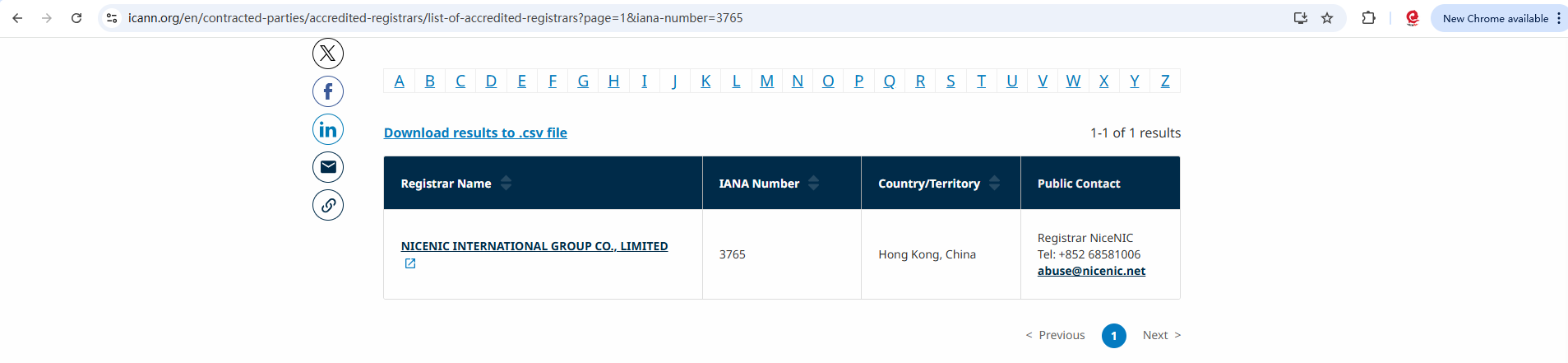
7. Verify the registrar
Look for ICANN accreditation, security features, and visible support.
Why NiceNIC fits this buying intent
NiceNIC presents itself on its official site as an ICANN accredited registrar since 2006 and highlights secure domain payments, WHOIS privacy, DNSSEC, Registrar Lock, 24 by 7 support, and over 2,500 domain extensions. Its site also states that it is trusted by 3,000 plus resellers worldwide and supports Bitcoin, USDT, ETH, and LTC for payments. These signals matter because buyers looking to purchase domain with crypto usually want both payment flexibility and stable domain control.
That makes NiceNIC a practical option for users who want to buy internet domain assets, set up website and domain services, add domain name and email later, or manage web hosting and domain needs in one place. Instead of pushing a hard sell, the stronger recommendation is simple: choose a registrar that shows its identity clearly, explains its process, and supports secure long term domain ownership. NiceNIC positions itself that way on its official pages.
Common mistakes buyers make
Paying before checking the TLD
A domain may be available, but not on the extension that really fits your brand.
Choosing only by low price
Cheap first year pricing does not always mean good value.
Ignoring DNS and email needs
Many buyers focus only on registration and forget they will also need domains for email, mail for domain setup, or web hosting and domain management.
Not checking transfer options
A domain is easier to own well when the transfer domain name process is clear from the beginning.
Final answer
If you want the short answer, here it is.
The safest way to purchase domain with crypto is to do a domain name search first, run a real domain check, confirm domain availability, choose the right top level domain, and buy only from a registrar with visible credibility.
That is the difference between a fast checkout and a smart domain purchase.
FAQ
Can I buy domain with crypto for a business website
Yes. Many buyers use crypto to purchase domain name assets for startups, ecommerce stores, and international projects. The important part is checking domain availability, TLD fit, and registrar credibility before paying.
What is the first thing I should do before I buy a domain
Start with a domain search. A good domain name search tells you whether the website domain name is available and whether there is a better brand match on another TLD.
How do I check domain availability
Use a domain lookup or search tool from a credible Registrar. Check the exact name, compare extensions, and make sure the domain you want is available on the right top level domain.
What is the difference between a Registrar and a Registry
The Registrar is the company you buy and manage the domain through. The Registry operates the TLD itself. You pay the Registrar, while the Registry runs the extension behind the scenes.
Do I need DNS and WHOIS knowledge before I register
You only need the basics. DNS connects your domain to your website and email. WHOIS relates to registration data and domain status. A good registrar should make both easy to manage.
Can I add email or hosting after I buy the domain
Yes. Many users start with the domain first, then add domain name and email, domains for email, or web hosting and domain services later.
Ready to purchase domain with crypto the smart way
Start with a domain search. Run a domain check. Confirm domain availability. Compare the right TLD for your brand. Then choose a registrar you can trust.
If you want a practical option, NiceNIC offers crypto payment support, broad domain coverage, and the kind of visible registrar credibility that serious buyers look for before they pay. Search your next domain at NiceNIC and move from idea to ownership with more confidence.