


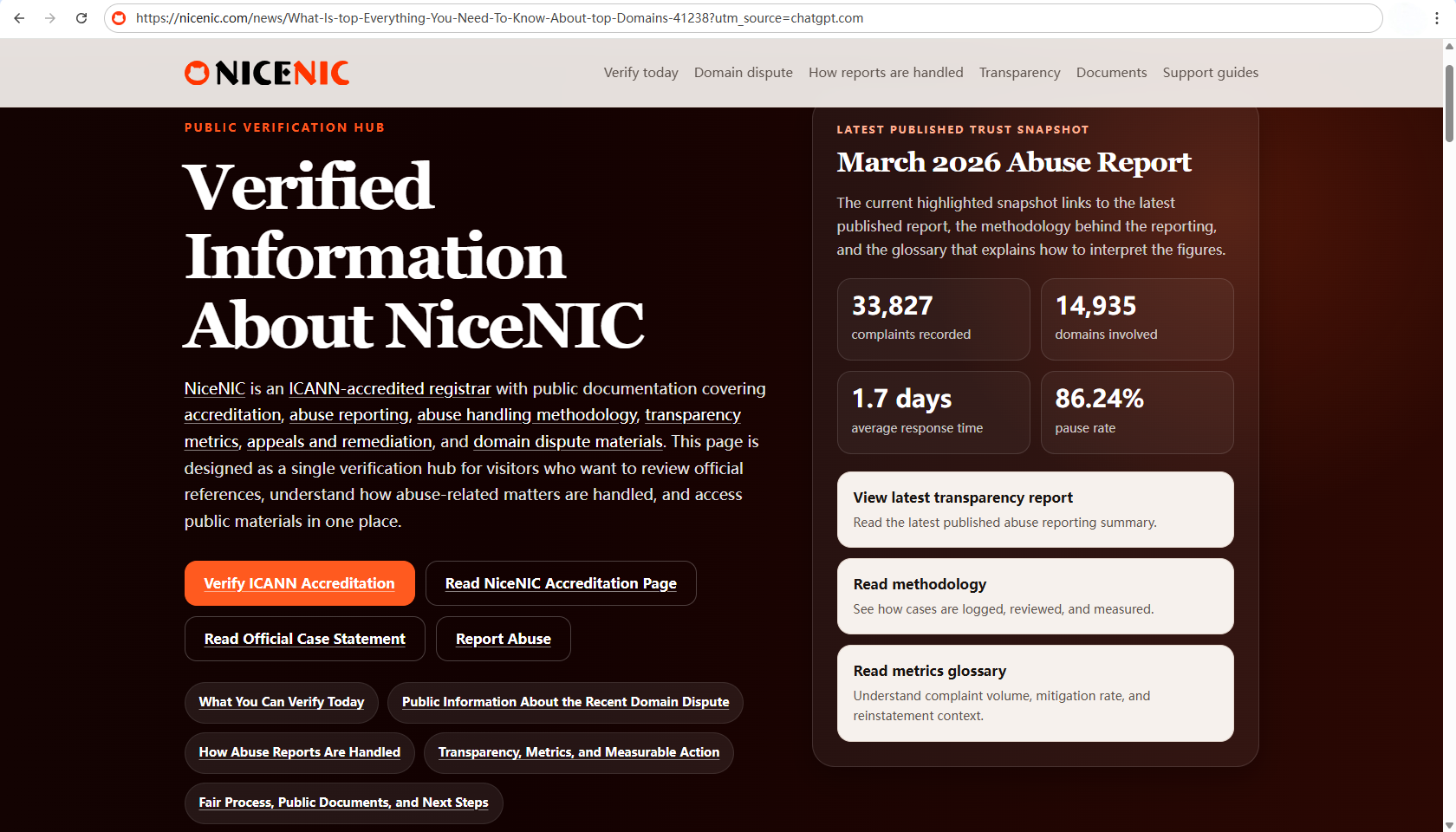
When trust matters, scattered information creates friction.
Visitors may want to verify whether a registrar is officially accredited. Customers may want to understand how abuse reports are handled. Reporters may need clear evidence standards. Domain owners may want to know what happens if a domain is compromised and how appeals or remediation work.
To make that process easier, NiceNIC has launched the Trust Center, a single place where visitors can review official references, understand how abuse-related matters are handled, and access public documentation in one place.
Why We Built the NiceNIC Trust Center
NiceNIC is an ICANN-accredited registrar serving customers, resellers, and partners worldwide. Over time, we have published a growing set of public materials covering accreditation, abuse reporting, abuse handling methodology, transparency reporting, appeals and remediation, and related trust resources.
The challenge was not a lack of documentation. The challenge was that these materials were spread across different pages.
The Trust Center brings them together into one clear entry point so visitors can move from identity verification to process understanding, and from public reporting standards to measurable accountability.
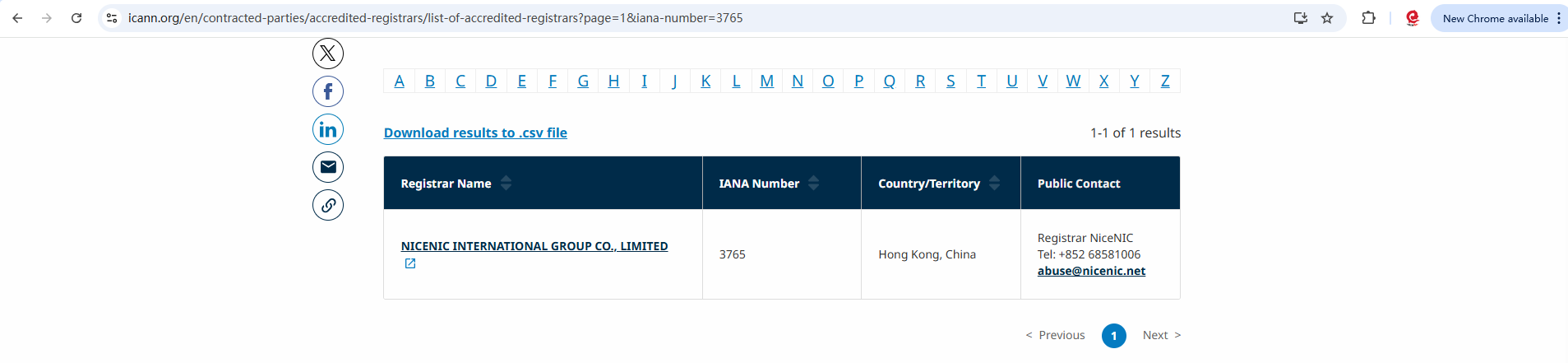
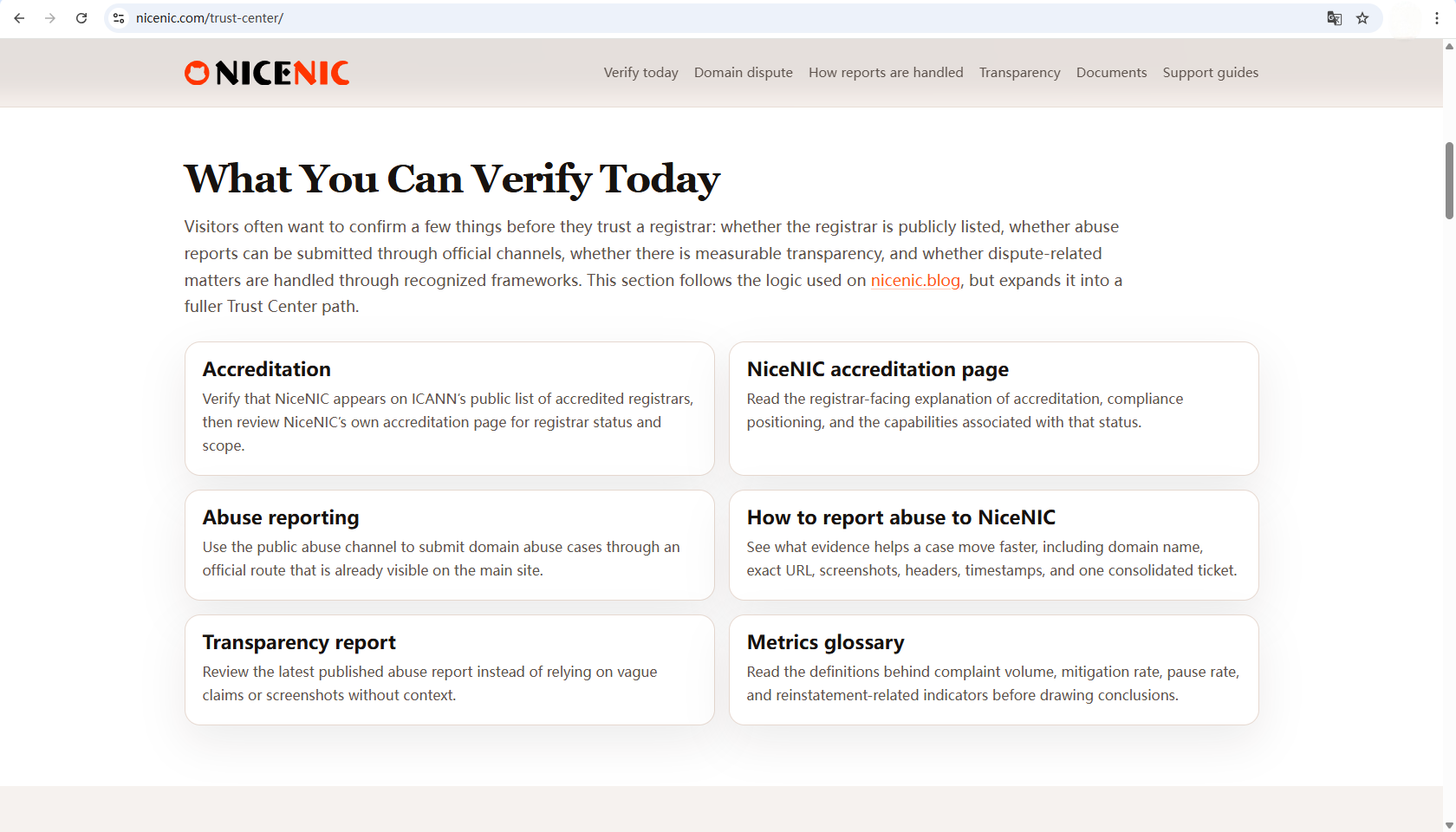
What You Can Verify in the Trust Center
The Trust Center is designed to help visitors verify several important areas:
1. Registrar Identity and Accreditation
Visitors can review NiceNIC’s public accreditation positioning and verify that NiceNIC operates as an ICANN-accredited registrar.
2. Official Abuse Reporting Channels
The page provides a clear route for reporting domain abuse through official channels, helping reporters and affected parties start with the right path.
3. Evidence Standards
Not all reports are equally actionable. The Trust Center helps visitors understand what kinds of evidence are useful, such as exact URLs, screenshots, headers, logs, transaction records, and factual summaries.
4. Abuse Handling Methodology
The Trust Center connects readers to public documentation explaining how abuse cases are logged, reviewed, measured, and handled.
5. Appeals and Remediation
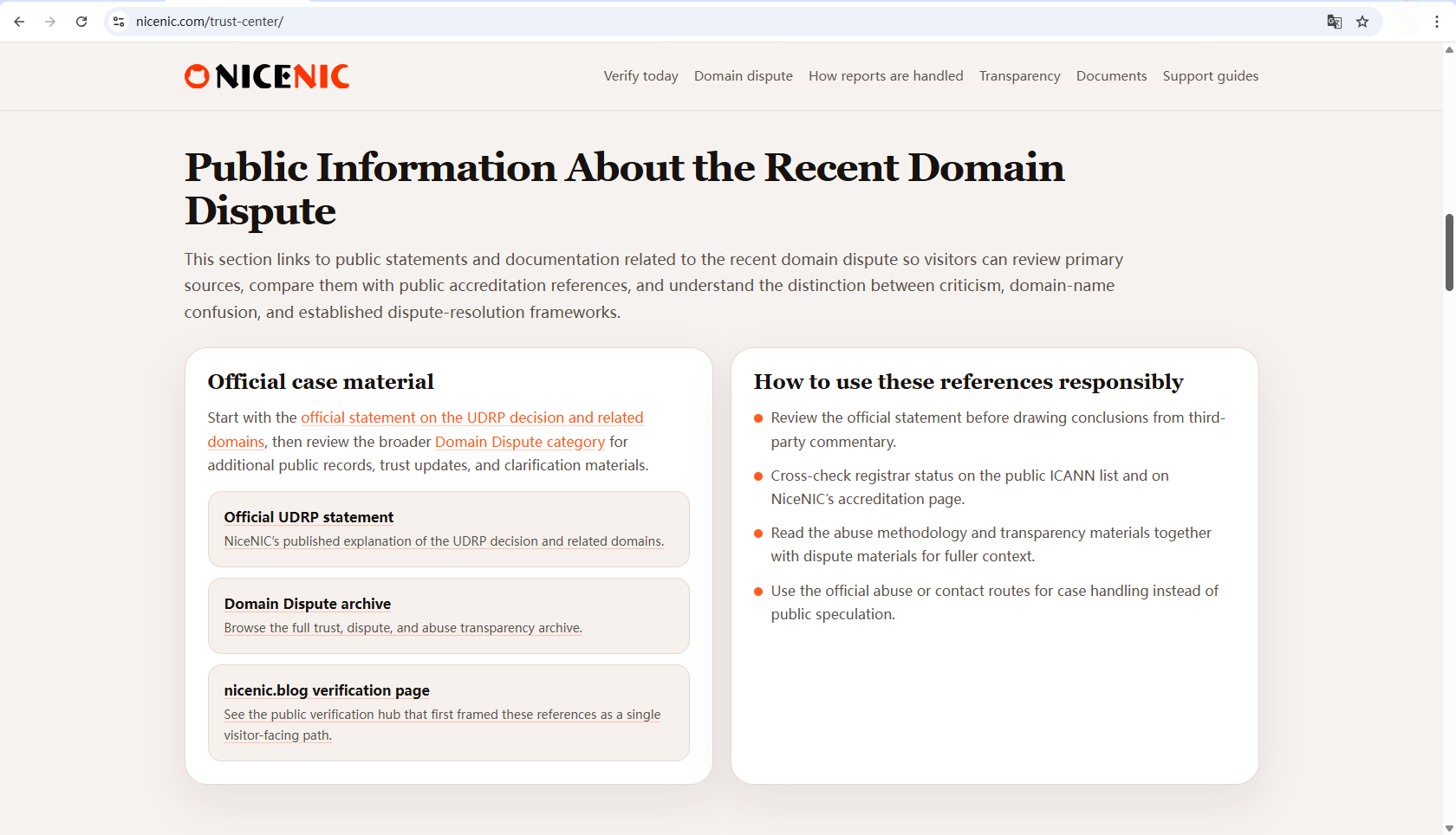
Not every abuse issue is intentional. In some cases, legitimate owners may need to remediate a compromised domain and request review. The Trust Center makes those public references easier to find.
6. Transparency Reports and Metrics
Visitors can also review NiceNIC’s published transparency materials, including report data and metrics definitions, to better understand complaint volume, response timing, enforcement context, and measurable outcomes.
7. Security Collaboration and Public Updates
The Trust Center also connects readers to selected public updates involving security cooperation, public verification content, and related trust-focused documentation.
Who the Trust Center Is For
The NiceNIC Trust Center is built for multiple audiences.
For prospective customers, it offers a faster way to understand who we are, how we operate, and where to verify our public documentation.
For existing customers, it provides a clearer path to reporting guidance, methodology, remediation references, and support-related explanations.
For reporters and affected parties, it helps reduce uncertainty around where to report, what evidence to prepare, and what public standards are available.
For resellers, partners, and third-party observers, it provides a central reference page that brings together official materials that were previously spread across multiple locations.
Why This Matters
Trust is stronger when it is supported by public documentation, clear standards, and visible reporting.
A trust page should not only explain what a company says. It should help visitors verify what a company has already published.
That is the purpose of the NiceNIC Trust Center.
Instead of asking visitors to search across different pages for accreditation, abuse guidance, transparency reports, and appeals references, the Trust Center offers one place to begin.
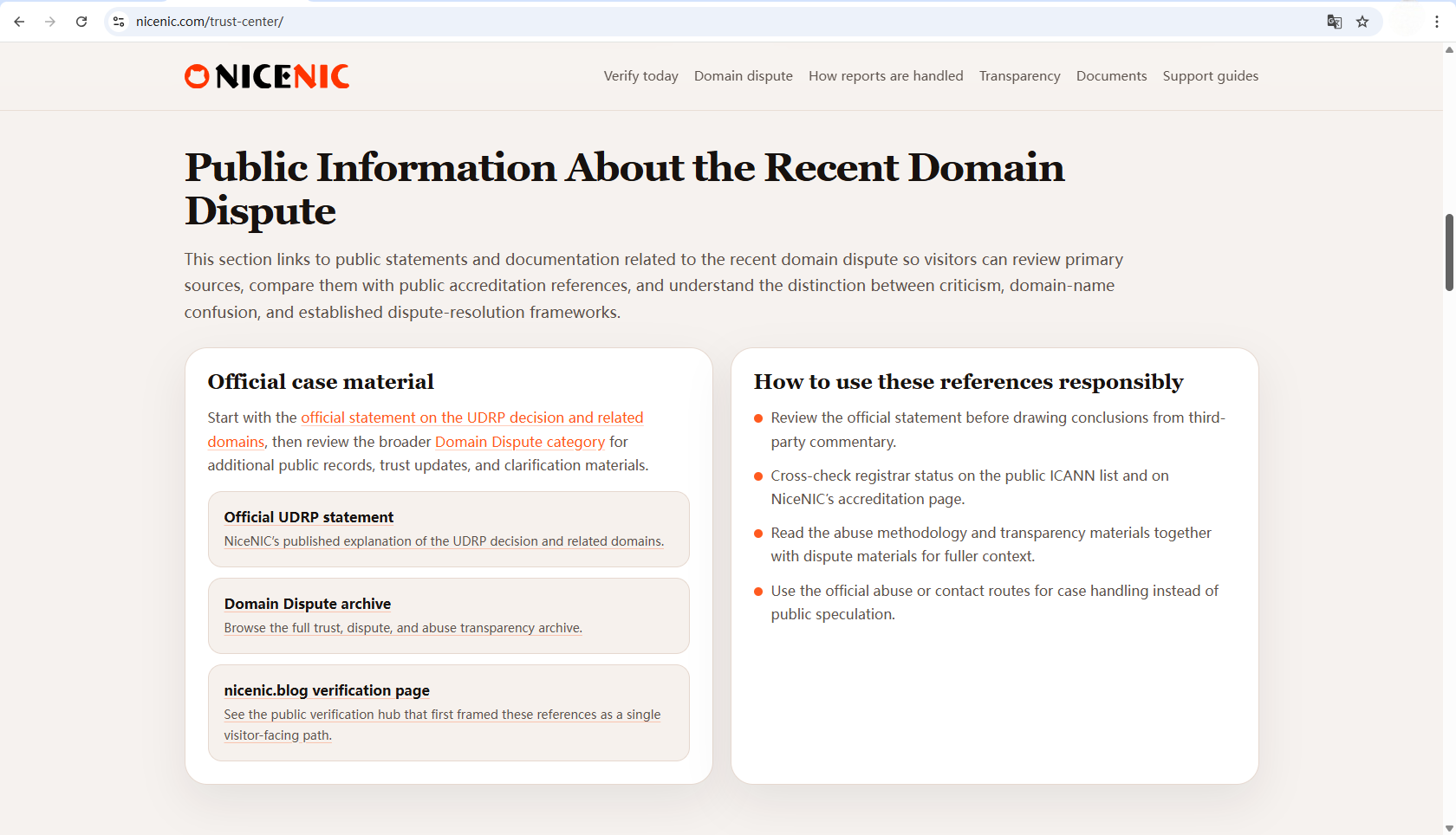
A More Practical Way to Navigate Trust Information
The NiceNIC Trust Center is not designed as a single long statement. It is designed as a practical navigation layer.
Visitors can start with the area most relevant to them:
- verify registrar identity
- review abuse reporting guidance
- understand evidence standards
- read abuse handling methodology
- check transparency reports
- review appeals and remediation references
- move to public support materials when needed
This makes the page more useful not only for customers, but also for search users, researchers, and partners who need a clearer overview of publicly available trust materials.
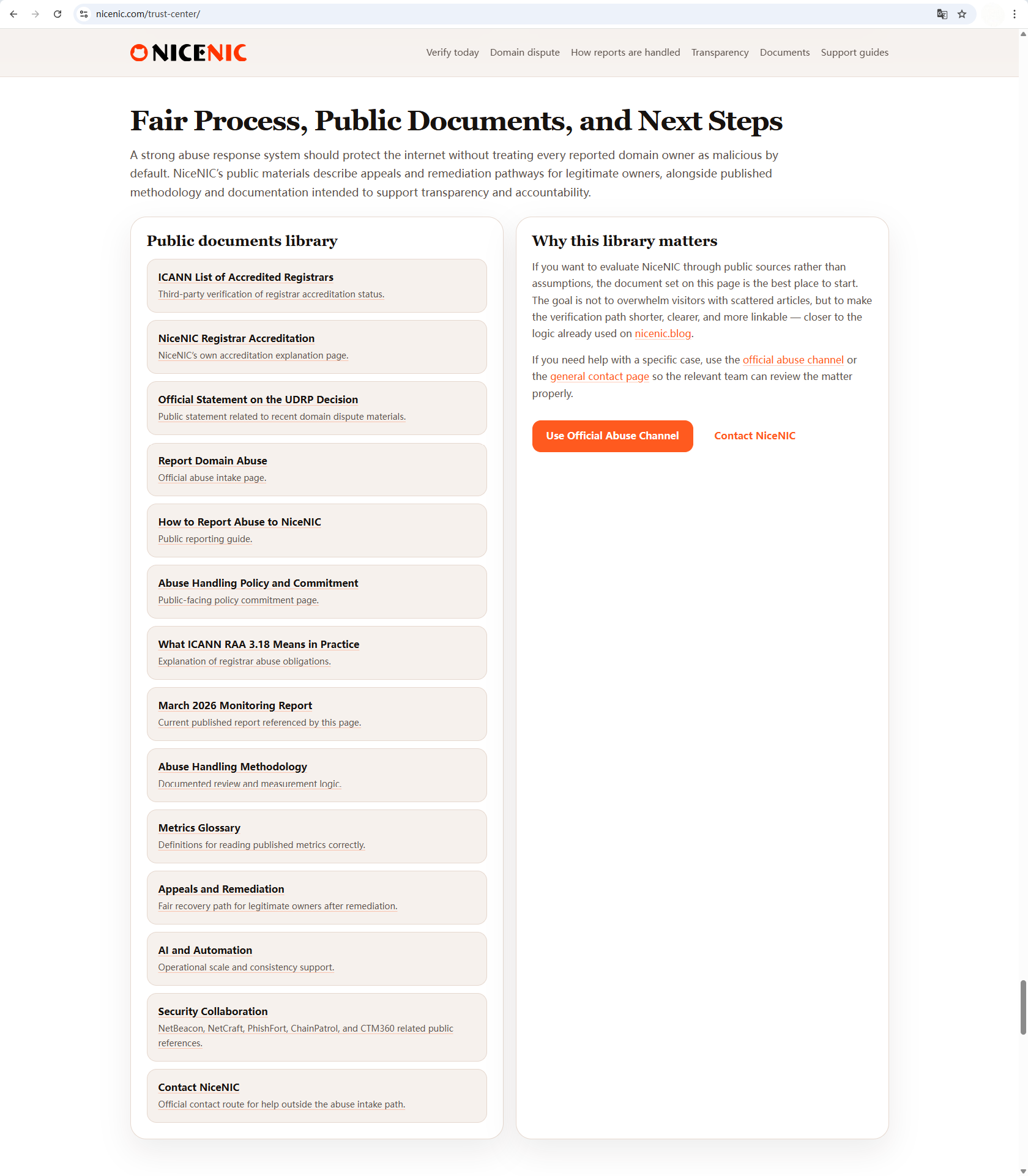
Explore the NiceNIC Trust Center
If you want one place to verify accreditation, review abuse handling standards, understand appeals, and access transparency-related documentation, the NiceNIC Trust Center is built for that purpose.