

For SEO agencies, domain strategy is no longer limited to keywords and backlinks. As search engines mature and user behavior becomes a stronger ranking signal, domain extensions (TLDs) play an increasingly important role in brand perception, trust, and click behavior, all of which indirectly influence SEO performance.
Modern SEO is about alignment: aligning technical signals, branding, and user expectations. Advising clients on the right domain extension is part of that alignment. This is where working with a registrar built for professional, multi-client SEO workflows like Nicenic gives SEO agencies a structural advantage over consumer-focused platforms.
Do Domain Extensions Affect SEO Rankings
Search engines have clearly stated that most generic TLDs do not receive direct ranking boosts. However, large-scale SEO studies and search behavior analysis consistently show that domain extensions affect SEO indirectly through:
-
User trust and credibility perception
-
Click-through rates in search results
-
Brand memorability and repeat searches
-
Backlink willingness from publishers
Search engines increasingly rely on behavioral and brand signals to evaluate relevance. Domain extensions strongly influence those signals, especially in competitive SERPs.
Choosing .com, .net, and Established TLDs for Broad Reach
Why Established Extensions Still Dominate
Extensions like .com and .net remain the most recognized globally. User trust studies show that users instinctively associate these TLDs with legitimacy, stability, and scale. When presented with multiple similar results, users are more likely to click a .com domain, even if ranking positions are equal.
For SEO agencies, this matters because:
-
Higher click-through rates reinforce relevance signals
-
Strong brand recall increases branded searches
-
Publishers are more comfortable linking to established TLDs
This is why .com continues to be the default recommendation for brands targeting international or undefined markets.
Nicenic supports transparent access to .com, .net, and other established TLDs with predictable renewals, enabling agencies to build long-term SEO strategies without pricing volatility.
Using Niche TLDs Like .tech or .io Strategically
Industry Signaling and Contextual Relevance
Niche and industry-specific TLDs such as .tech, .io, or .ai do not inherently rank higher, but they communicate context immediately. In technology, SaaS, and startup ecosystems, these extensions are widely accepted and often perceived as modern or innovative.
SEO agencies can leverage these TLDs to:
-
Reinforce industry relevance
-
Improve brand-message alignment
-
Increase memorability within specific communities
In some verticals, niche TLDs can improve click performance because they clearly signal relevance to a targeted audience.
When Niche TLDs Make Sense for SEO
Niche extensions work best when:
-
The audience is already familiar with the extension
-
Branding is strong and consistent
-
Content quality and authority are high
They should not be used as a shortcut for SEO. Instead, they function as contextual amplifiers that support positioning.
Nicenic’s broad TLD portfolio allows SEO agencies to evaluate and secure the right extension based on market fit rather than availability constraints.
Country-Code TLDs and Local SEO Signals
Country-code TLDs (ccTLDs) remain one of the strongest signals for geographic targeting. Search engines use ccTLDs as a clear indicator of regional relevance.
For SEO agencies managing local or regional campaigns:
-
ccTLDs can improve local SERP alignment
-
Users often trust local extensions more
-
Local backlinks are easier to earn
Nicenic provides access to a wide range of ccTLDs, enabling agencies to support geo-focused SEO strategies without relying on multiple registrars.
Trust Signals and Extension Reputation
Not all TLDs carry the same reputation. Some newer or poorly governed extensions have historically been associated with spam or abuse, which can negatively affect user trust.
SEO agencies must consider:
-
Registry reputation
-
Abuse rates and enforcement
-
Email deliverability and security implications
While search engines do not penalize TLDs directly, user distrust leads to lower engagement, which indirectly impacts performance.
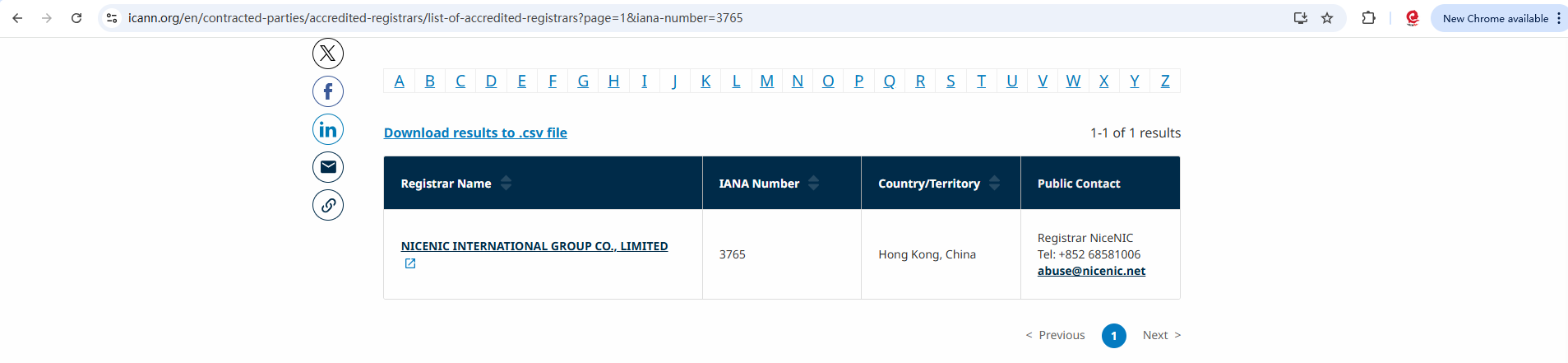
As an ICANN-accredited registrar, Nicenic works directly with registries and enforces compliant abuse-handling processes, helping agencies avoid reputational risks tied to low-quality extensions.
How Nicenic Supports SEO Agencies at Scale
SEO agencies often manage dozens or hundreds of domains across clients, campaigns, and regions. This requires registrar infrastructure that supports scale, predictability, and automation.
Nicenic provides:
-
Broad access to global, niche, and country TLDs
-
Transparent pricing without renewal shocks
-
API-based domain and DNS management
-
Registrar-level security controls and ownership clarity
These capabilities allow SEO agencies to integrate domain extension strategy directly into SEO planning, migrations, and long-term growth models.
Why Nicenic Differs from GoDaddy and Namecheap
Consumer registrars like GoDaddy and Namecheap are optimized for individual purchases, promotional pricing, and upsells. This often conflicts with professional SEO needs, such as:
-
Long-term pricing stability
-
Bulk domain strategy planning
-
Clean DNS and migration workflows
-
Multi-client management
Nicenic is built for professional users and infrastructure partners, making it better aligned with SEO agencies that treat domains as strategic assets rather than one-off purchases.
Practical Framework for SEO Agencies
When advising clients on domain extensions, SEO agencies should evaluate:
-
Target audience and geography
-
Industry norms and trust expectations
-
Brand positioning and long-term scalability
-
SEO goals beyond initial rankings
The “best” TLD is the one that aligns all four.
Conclusion
Domain extensions do not replace strong SEO fundamentals, but they meaningfully influence trust, engagement, and brand signals that search engines increasingly rely on.
SEO agencies that understand how to leverage .com, established TLDs, niche extensions, and ccTLDs strategically can guide clients toward better long-term visibility and brand authority.
By partnering with Nicenic, SEO agencies gain the flexibility, transparency, and registrar-level control needed to implement domain extension strategies at scale, setting themselves — and their clients — apart in an increasingly competitive search landscape.
Next News: Integrating Domain Registration into Your Web Design Workflow