Expanding your business internationally requires more than just offering products in new markets. One of the most crucial aspects of global growth is a well-thought-out domain strategy. In this guide, we’ll walk you through how a strong domain strategy can unlock new opportunities, build trust with local customers, and boost your visibility in international markets.
What is a Global Domain Strategy?
A global domain strategy is a plan for structuring and managing your domain portfolio to support international expansion. This includes selecting the right domain extensions, localizing your website, and ensuring your domain management system scales with your growing business.
Why Domains Matter in Global Expansion
-
Local Trust
Using local domain extensions (ccTLDs) such as .de for Germany or .co.uk for the United Kingdom helps build trust with local customers. Local domains show that you are invested in the local market and enhance your credibility.
-
SEO Performance
Search engines often prioritize websites with local ccTLDs in regional searches. This improves your chances of ranking higher in local search engine results, driving more organic traffic.
-
Brand Positioning
Choosing the right domain can help your business stand out in international markets. Using a local ccTLD signals your relevance to that region, positioning your brand as both professional and culturally attuned to local expectations.
Key Approaches to a Global Domain Strategy
1. Single Global Domain
2. Subdomains
-
Example: de.yourbrand.com
-
Pros: Moderate localization, centralized control
-
Cons: Less effective for SEO than country-specific ccTLDs
3. Country-Specific Domains (ccTLDs)
-
Example: yourbrand.de, yourbrand.uk
-
Pros: Strong local trust, better SEO results
-
Cons: More complex management
Key Steps to Building Your Global Domain Strategy
Step 1: Identify Target Markets
Before selecting domains, it’s crucial to understand where your customers are and where growth potential exists.
Step 2: Secure Relevant Domains Early
Register the ccTLDs you need as soon as possible to protect your brand globally and prevent domain squatting.
Step 3: Localize Your Content
Localize your website’s language, currency, and other cultural elements to better resonate with local markets.
Step 4: Centralize Domain Management
Managing multiple domains can get complicated. It’s essential to have bulk management tools, automation, and a clear structure for easy oversight.
Step 5: Plan for Scalability
Your domain strategy must grow with your business. Ensure it can handle new market entries without requiring a complete overhaul.
Common Mistakes to Avoid in Global Domain Strategy
-
Only using one global domain (e.g., yourbrand.com)
-
Ignoring the importance of local trust with ccTLDs
-
Delaying domain registration, which risks losing valuable domains
-
Failing to automate domain management
How NiceNIC Supports Global Expansion
At NiceNIC, we make it easier for businesses to scale internationally with:
-
Access to a wide range of global ccTLDs
-
Multi-language platform support for diverse markets
-
Bulk domain management tools to simplify operations
-
API-based automation to streamline your domain portfolio management
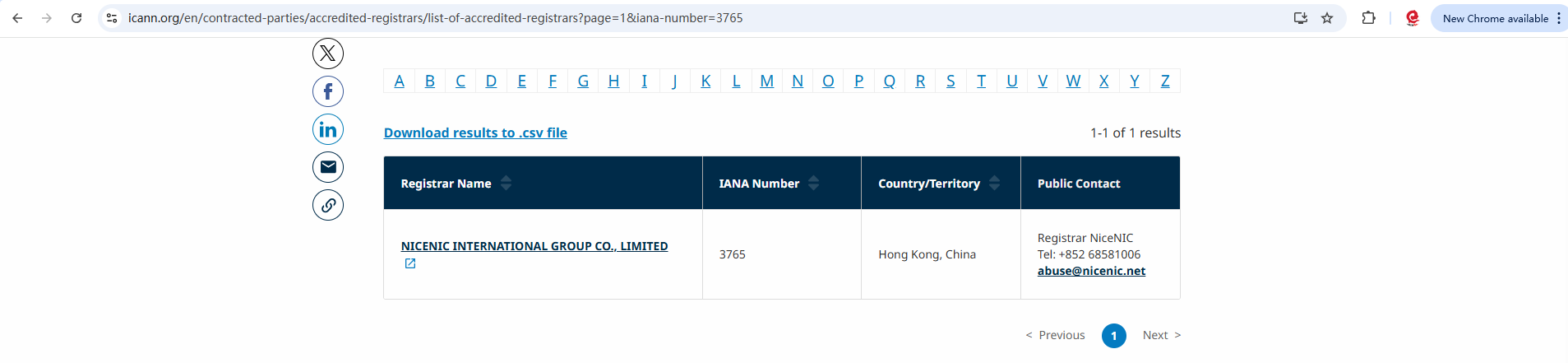
NiceNIC is an ICANN-accredited registrar that offers a reliable and scalable solution for businesses looking to expand globally. We provide the tools and expertise to help you establish a strong, localized online presence while simplifying domain management across multiple countries.
Conclusion:
A global domain strategy is essential for businesses aiming to expand internationally. Whether you choose a single global domain, subdomains, or country-specific ccTLDs, a strategic approach to domain management will position your brand for long-term success.
Ready to expand your business globally? Start building your international domain strategy with NiceNIC today.
FAQ Section
Q1: What is the difference between ccTLDs and gTLDs?
ccTLDs (country code top-level domains) are domain extensions that are specific to countries or regions, like .de for Germany or .co.uk for the United Kingdom. gTLDs (generic top-level domains) are domain extensions like .com or .net that are not tied to specific countries.
Q2: Why should I use a local domain extension for my business?
Using a local ccTLD helps establish trust with local customers and boosts your SEO performance in the target region. It signals to search engines and users that your business is relevant to their country.
Q3: Can I use a single global domain for international markets?
Yes, but it has limitations. A single global domain like yourbrand.com is easy to manage, but it may not build the same level of local trust or SEO benefits as country-specific domains.
Q4: How can NiceNIC help with global domain management?
NiceNIC offers a wide range of global domain extensions, multi-language platform support, and bulk domain management tools to help businesses scale their domain portfolio efficiently across multiple regions.
Q5: What are some common mistakes businesses make with their domain strategy?
Common mistakes include not registering local ccTLDs early enough, failing to localize website content, and managing multiple domains without automation, which can lead to inefficiency and missed opportunities.
Our ICANN-accredited services and powerful tools ensure you can easily expand and scale in new international markets.