


What Is Domain Threat Intelligence
Domain threat intelligence is the process of collecting and analyzing signals related to harmful domain activity. These signals can include phishing pages, fraudulent redirects, domain spoofing, malware delivery patterns, suspicious DNS behavior, and other abuse indicators. In simple terms, it helps a registrar or security team understand whether a domain name may be involved in harmful activity and how urgently it should be reviewed. ICANN draws a clear line here: a Registrar is responsible for investigating and responding to abuse reports involving domains it sponsors, while a Registry operates the top level domain itself.
Definition, Explanation, and Example
Why Domain Threat Intelligence Matters for Modern Registrars
A modern registrar cannot rely only on isolated complaints or manual review without context. Abuse actors move quickly across websites, email systems, social platforms, and DNS infrastructure. Etzerity’s website publicly describes monitoring across those channels and highlights capabilities such as phishing and cloaking detection, brand infringement monitoring, identity impersonation detection, malware and command control intelligence, website integrity monitoring, and internet infrastructure threat monitoring. These categories matter because many abusive campaigns do not stay within one channel. They move from email to web pages, from social impersonation to domain spoofing, and from one domain to another.
For registrars, better visibility supports better judgment. ICANN’s current framework requires registrars to maintain accessible abuse contacts, investigate abuse reports, respond appropriately, document procedures, keep records, and take mitigation action to stop or disrupt DNS Abuse when the evidence is sufficient. ICANN also states that evidence must be actionable, meaning it must be enough for the registrar to make a reasonable determination about whether the reported domain is being used for DNS Abuse.
How NiceNIC Uses Recognized Threat Intelligence
NiceNIC does not treat outside intelligence as a substitute for compliance review. We treat it as a recognized input that may support faster detection, stronger context, and more consistent review.
1. Detection
Recognized intelligence sources can help surface risk signals earlier. This is useful when a domain may be involved in phishing, impersonation, malicious redirects, or suspicious infrastructure patterns before a full complaint file has been built. Etzerity publicly presents its platform as analyzing more than 7 million threats daily, with less than 15 minutes average response time and monitoring across websites, email systems, social platforms, and broader internet infrastructure.
2. Validation
NiceNIC still reviews the case independently. A third party signal alone does not automatically mean a domain should be suspended. ICANN’s guidance makes clear that the registrar must assess whether the evidence is actionable and whether mitigation should be proportionate to the circumstances. In some cases, suspension may be appropriate. In other cases, especially where compromise is likely or a subdomain is involved, immediate suspension may cause unnecessary collateral damage.
3. Response
If the evidence supports action, the registrar must respond appropriately within its role. ICANN’s current compliance guidance explains that registrars may suspend a registered name, apply clientHold, or take other mitigation steps when DNS Abuse is reasonably confirmed. It also emphasizes that registrars must be able to explain their reasoning and provide records demonstrating compliance if ICANN Contractual Compliance investigates the case.
Why This Approach Builds More Trust
Using recognized domain threat intelligence in a disciplined way helps multiple groups at once.
For customers, it means reports can be reviewed with better context instead of guesswork.
For legitimate registrants, it means signals are not treated as automatic guilt. The registrar still needs evidence, review standards, and a proportionate response.
For resellers and business users, it means the registrar is not passive about abuse, but it is also not arbitrary.
For ICANN compliance review, it means the registrar can show that it has public abuse contacts, documented procedures, records, and a reasoned process for handling reports.
This is especially important because many concerns about abuse handling come from two extremes. Some users worry that a registrar reacts too slowly. Others worry that a registrar may act too quickly based on incomplete information. A stronger model is not blind tolerance and not blind automation. It is evidence based review supported by reliable intelligence and clear internal accountability.
Why NiceNIC Is a Practical Choice
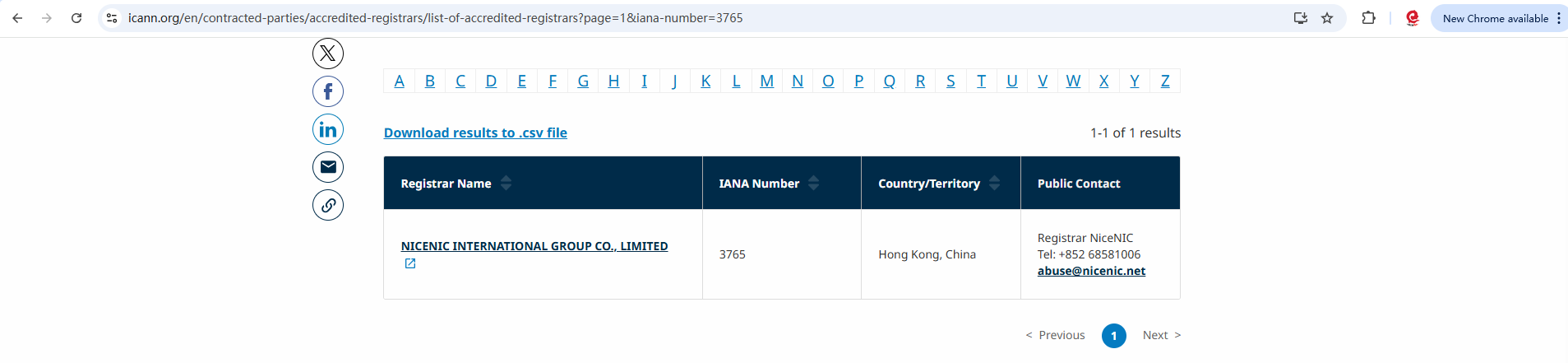
NiceNIC is an ICANN accredited registrar since 2006. We support domain registration, transfer, and management across 2,500 plus extensions, offer structured domain management tools, and serve users and partners globally. Our public site states that we support customers in over 100 countries, provide multilingual service, and maintain a documented abuse handling process aligned with ICANN policies. That matters because trust in domain registration is not just about price or extension availability. It is also about how a registrar handles security, ownership, abuse reporting, and operational stability.
Some registrars in the market are known for limited communication, unclear abuse procedures, or inconsistent follow up. NiceNIC’s positioning is different. We emphasize transparent operations, fair abuse handling, responsive human support, and secure domain ownership. For businesses, resellers, and serious domain investors, that combination is often more valuable than a low headline price alone.
Clear Conclusion
Domain threat intelligence is now part of responsible registrar operations. It helps identify abuse faster, improves review quality, and supports safer domain operations when used correctly. At NiceNIC, we recognize the value of credible external intelligence sources such as Etzerity, but we do not outsource our judgment to them. Our responsibility as an ICANN accredited registrar is to investigate, assess, document, and respond appropriately based on actionable evidence, registrar scope, and the need to protect both internet users and legitimate registrants.
FAQ
What is domain threat intelligence
Domain threat intelligence is information that helps identify harmful activity connected to domain names, such as phishing, spoofing, malicious redirects, or malware related behavior. It gives registrars and security teams more context for reviewing abuse cases.
Does NiceNIC partner with Etzerity
This article does not announce a partnership. NiceNIC’s position is that we recognize and may reference credible external threat intelligence where relevant, but our compliance decisions remain independent and based on our own review standards.
Can a registrar suspend a domain just because a third party flags it
Not by signal alone. A registrar still needs to assess whether the evidence is actionable and whether the response is appropriate under ICANN obligations and the specific facts of the case.
What does ICANN require from a registrar in abuse cases
ICANN requires registrars to maintain abuse contacts, investigate and respond appropriately to abuse reports, publish abuse handling procedures, keep records, and take mitigation action to stop or disrupt DNS Abuse when justified.
Why does this matter to customers and resellers
It matters because a reliable registrar should protect legitimate users while also taking credible abuse seriously. Better intelligence plus a documented review process leads to more stable, fair, and trustworthy domain operations.
If you want a registrar that combines global domain management with security aware operations, NiceNIC is built for that role. As an ICANN accredited registrar serving users worldwide, we provide secure and stable domain services, transparent processes, and a practical approach to abuse review that respects both internet safety and legitimate ownership. Choose nicenic when you need a domain registrar that takes responsibility seriously.