


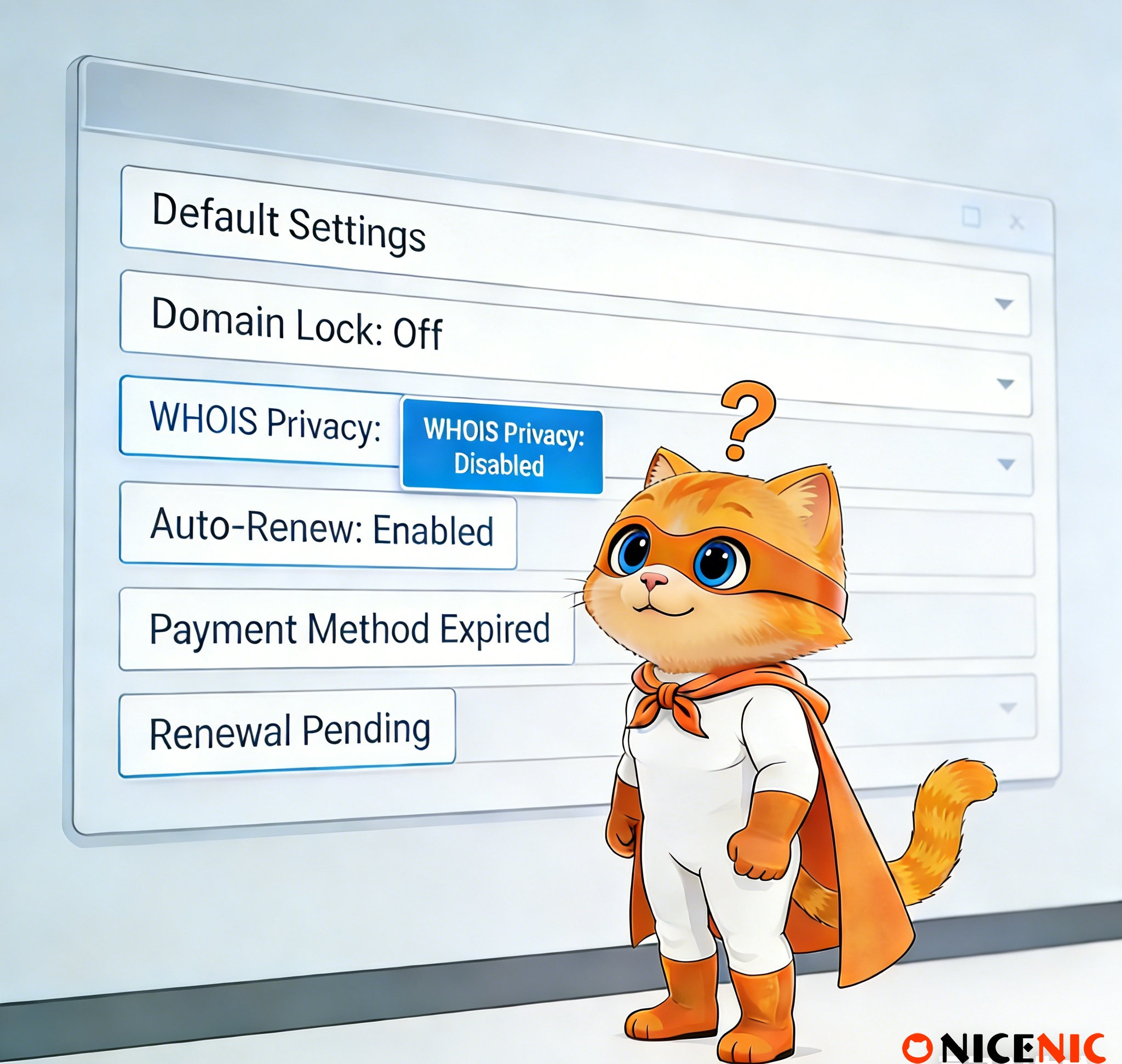
Many domain problems appear sudden and unexpected.
A website stops resolving. Email delivery fails. A domain is placed on hold without warning.
From the user’s perspective, these events often feel random. In reality, most of them are not accidents. They are the result of how registrar systems are designed to respond when something goes wrong.
Understanding these risks helps domain owners avoid unnecessary panic, reduce operational disruption, and make more informed decisions when choosing a registrar.
Why Registrar Risk Is Often Overlooked
When registering a domain, most users focus on a simple question: "Does it work?"
As long as registration and renewal appear smooth, the registrar fades into the background. The problem is that registrar design matters most during abnormal situations, not during normal operation.
Many support tickets arise not from technical failure, but from misunderstanding how responsibility, control, and escalation actually work in the domain ecosystem.
Risk 1: When a Domain Is Suspended, Users Often Don’t Know Who Made the Decision
A common source of confusion is domain suspension.
Users frequently ask:
-
Who suspended my domain?
-
Was this done automatically?
-
Can the registrar reverse it?
In practice, suspension may occur at different levels:
-
Registry level
-
Registrar level
-
Or as a result of upstream policy enforcement
Different registrars are designed differently. Some rely heavily on automated triggers, while others require evidence review and human confirmation before action is taken.
Suspension does not automatically imply wrongdoing.
It reflects how responsibility is allocated and how risk is handled within a registrar's operational structure.
Risk 2: Many Users Underestimate the Importance of Registrant Control
Paying for a domain does not automatically guarantee full control.
Control depends on:
-
Accurate registrant information
-
Properly assigned administrative contacts
-
Clear transfer and locking permissions
When these elements are unclear or restricted, users may encounter difficulty during transfers, disputes, or recovery processes.
Domain ownership is defined by control and accuracy, not payment alone.
Auto-renewal reduces risk, but it does not eliminate it.
Common issues include:
-
Failed payment methods
-
Missed notifications
-
Misunderstanding grace and redemption periods
Domain lifecycle rules exist to protect registrants, but they still require active awareness. Many expiration-related support tickets stem from the assumption that auto-renewal is guaranteed.
Automatic systems help, but responsibility is shared.
Risk 4: Critical Problems Rarely Happen During "Normal" Conditions
Most domains work quietly for years.
Problems tend to appear during:
-
Abuse complaints
-
DNS misconfigurations
-
Verification requests
-
Policy enforcement events
At these moments, the registrar’s support design becomes visible. Some systems prioritize automation, while others emphasize escalation paths and human review.
Registrar support matters most when something goes wrong, not when everything is fine.
Risk 5: Not All Registrars Operate at the Same Compliance Level
Many users are unaware of the difference between:
-
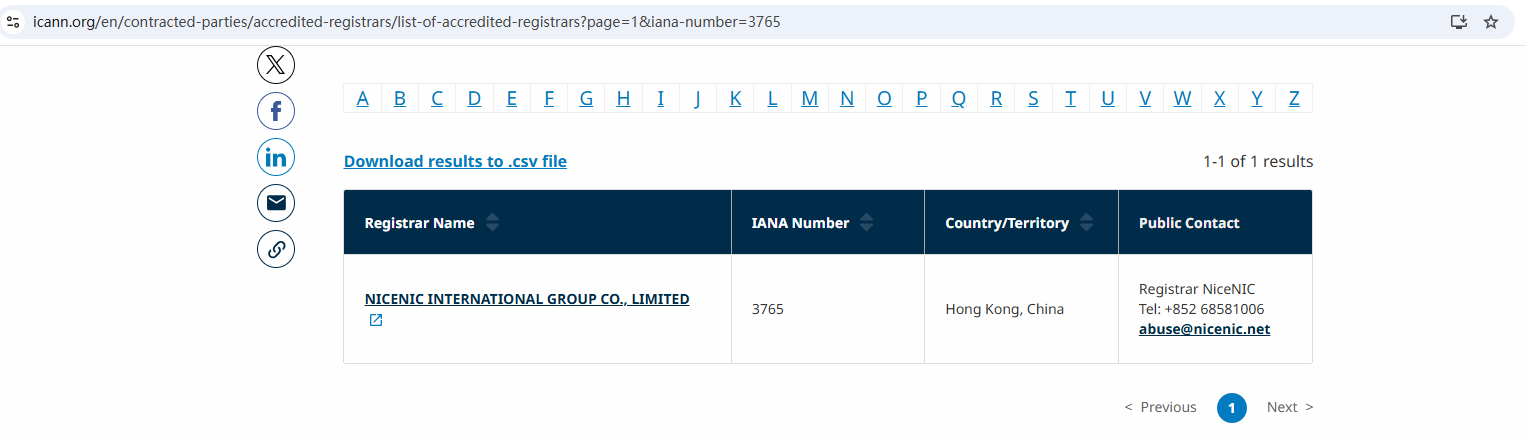
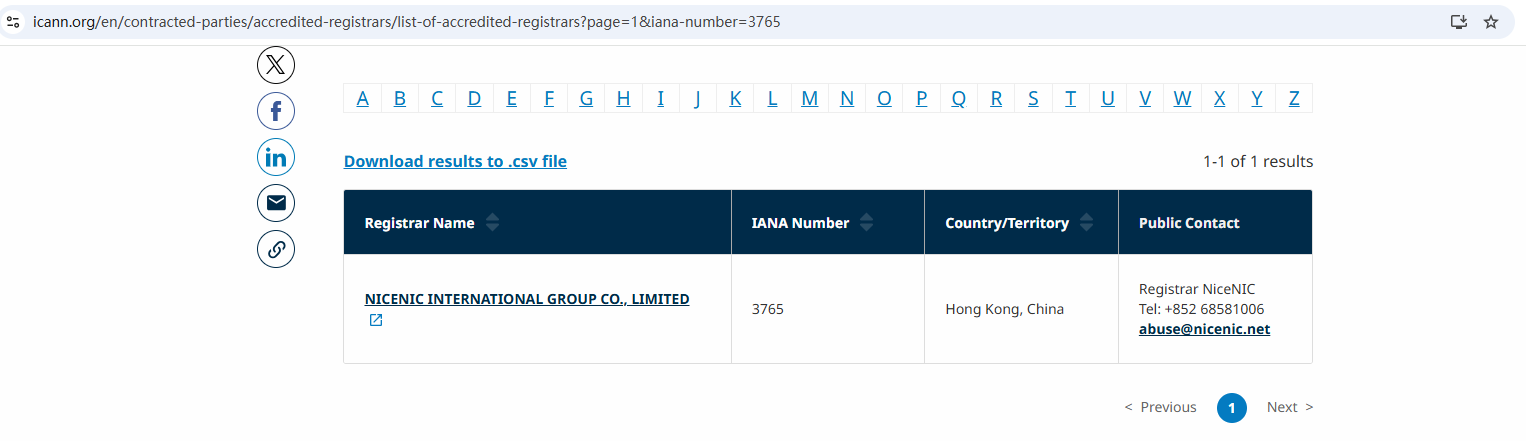
ICANN-accredited registrars
-
Resellers operating through multiple layers
This distinction affects:
-
Response speed
-
Responsibility clarity
-
Communication during disputes
Compliance structure does not guarantee perfection, but it strongly influences how efficiently issues can be resolved.
Users who select a registrar based solely on introductory pricing often discover differences later, during renewal disputes, suspensions, or urgent incidents.
Registrar choice is not just a pricing decision. It is a risk-management decision.
How Users Can Reduce Registrar-Related Risk
A few practical checks can prevent many future issues:
-
Confirm ICANN accreditation
-
Understand suspension and appeal processes
-
Ensure full control over registrant and admin contacts
-
Review transfer and lock policies
-
Use multiple renewal reminders, not just auto-renewal
-
Choose registrars with clear escalation paths and human accountability
These steps help reduce confusion and prevent avoidable disruptions.
Final Thoughts
Registrar-related risks are not rare. They are simply poorly understood.
The real issue is not that problems exist, but that many users encounter them without context or preparation. Transparency, clear control, and predictable processes significantly reduce uncertainty.
For users managing domains long term, registrars designed around policy alignment, evidence-based handling, and registrant-first control tend to provide a more stable ownership experience.
As an ICANN-accredited registrar, Nicenic is built around these principles, supporting long-term domain ownership through transparency, accountability, and human judgment.
Nice to Register, Safe to Own
Brands, businesses, developers, and domain professionals worldwide trust NiceNIC — an ICANN-accredited domain registrar founded in 2006, supporting gTLDs, ccTLDs, and new gTLDs at global scale.
Why NiceNIC?
• Fair & Transparent Operations — No domain suspension without valid evidence
• Registrant-First Control — Lifetime free WHOIS privacy and full domain control
• Responsive Human Support — Real experts, real help, replies within 6 hours
• Global Accreditation — ICANN-accredited operations with multilingual support worldwide
• Scalable Infrastructure — 2,500+ domain extensions with API automation tools
• Flexible Payments — Crypto-friendly: BTC, USDT, ETH, LTC etc.
World-class teams collaborate on Microsoft and Google;
High-growth businesses scale with intelligent AI search;
Security-conscious brands protect domains with NiceNIC!
Next News: Is a .online Domain the Smart Choice for Startups in 2025?