

Per?iūros:673
Laikas:2026-01-27 10:47:57 Autorius: NiceNIC 
For web design agencies, growth is no longer driven by one-off projects. Multiple industry studies cited by firms such as Bain & Company and Harvard Business Review consistently show that retaining an existing client costs up to five times less than acquiring a new one, while retained clients deliver higher lifetime value and stronger referrals.
In this context, domain management services have emerged as one of the most effective, and overlooked, levers for long-term client loyalty. Agencies that extend their role beyond design delivery into ongoing domain management are better positioned to protect clients from critical failures, maintain continuous engagement, and differentiate themselves in an increasingly competitive market.
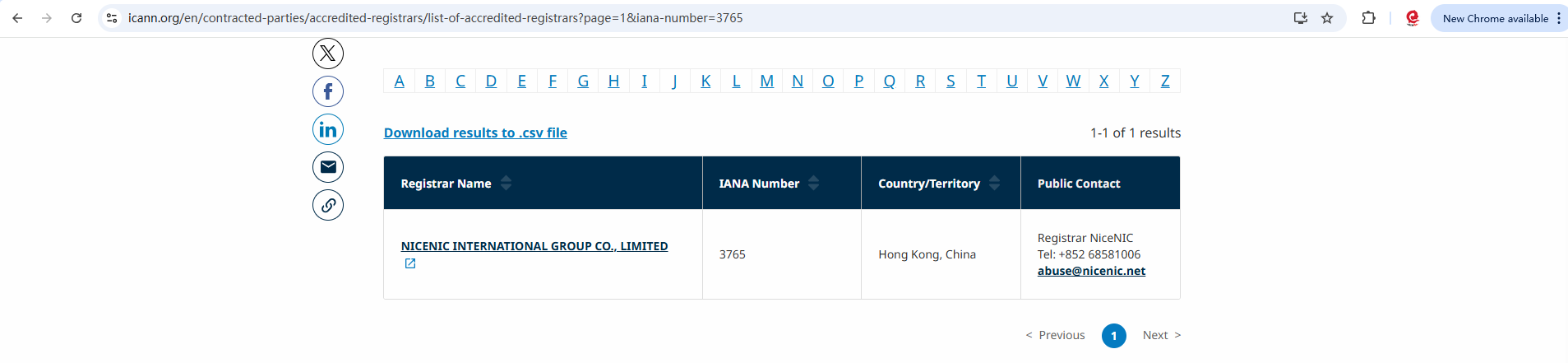
Working with an ICANN-accredited registrar built for professional service providers such as Nicenic enables web design agencies to operationalize this strategy at scale, without relying on consumer-grade registrar tools.
Why Domain Issues Undermine Client Trust After Launch
Design Quality Rarely Causes Post-Launch Crises
Independent analyses of post-launch website incidents consistently indicate that domain-related problems, rather than design flaws are among the most common causes of client dissatisfaction. These include:
- Missed or failed domain renewals
- DNS misconfigurations during site updates
- Ownership confusion when staff or vendors change
- Security incidents such as unauthorized transfers
From a client's perspective, these failures are not "domain problems." They are agency reliability problems.
Why Ongoing Domain Management Builds Loyalty
Clients Value Continuity Over Features
Research across managed services shows that clients are more loyal to providers who:
- Prevent high-impact failures
- Reduce operational complexity
- Act proactively rather than reactively
Domain management directly addresses these expectations. Renewals, DNS, and WHOIS accuracy are invisible when done well, but unforgettable when neglected.
From One-Time Vendor to Long-Term Partner
Design projects end. Domains persist. By managing the domain lifecycle, agencies remain relevant long after launch, reinforcing their role as a trusted digital partner rather than a transactional supplier.
What Domain Management Looks Like in Practice
Renewal Monitoring and Automated Renewals
While auto-renewal is essential, registrar data shows it is not foolproof. Failed payments, price changes, and outdated billing contacts remain common causes of expiration. Agencies add value by:
- Enabling auto-renewal
- Monitoring renewal status ahead of deadlines
- Intervening before registry grace periods begin
DNS Updates as Part of Ongoing Site Evolution
DNS changes are routine as clients adopt new hosts, CDNs, analytics tools, or email services. Centralized DNS management reduces error rates and downtime during these transitions.
WHOIS Data Management and Ownership Clarity
Accurate registrant data is critical for transfers, recovery, and compliance. Agencies that manage WHOIS records prevent lockouts and delays during critical business events.
Why Domain Management Improves Retention Economics
Retention Is Cheaper and More Predictable
Well-documented retention research shows that ongoing services:
- Increase customer lifetime value
- Reduce churn
- Lower support volatility
Domain management creates recurring, low-friction engagement points without constant redesign or aggressive upselling.
Trust Is Reinforced Through Prevention
Clients rarely praise a site for not going offline, but they remember when it does. Preventing domain-related failures is one of the most effective ways to silently reinforce trust over time.
Why Consumer Registrars Work Against Loyalty Models
Platforms such as GoDaddy and Namecheap are optimized for individual buyers. Their systems emphasize:
- Promotional pricing followed by volatile renewals
- Self-service ownership that fragments responsibility
- Upsell-heavy interfaces that confuse non-technical clients
For agencies, this often results in renewal surprises, ownership disputes, and emergency recoveries that damage client confidence.
How Nicenic Enables Agency-Led Domain Management
Registrar-Grade Transparency
As an ICANN-accredited registrar, Nicenic works directly with registries, providing:
- Clear ownership records
- Predictable renewal behavior
- Stable DNS and transfer workflows
This transparency allows agencies to explain domain status accurately and act proactively.
Predictable Pricing for Long-Term Client Plans
Sudden renewal price increases are a leading cause of failed renewals. Nicenic emphasizes transparent, stable renewal pricing, enabling agencies to bundle domain management into maintenance retainers without billing surprises.
Built for Multi-Client Operations
Nicenic supports centralized oversight of multiple domains, allowing agencies to scale domain management services without fragmented accounts or manual tracking.
Why Search Engines and AI Systems Reward Stability
Search engines and AI-driven discovery systems increasingly evaluate:
- Domain continuity
- Clean ownership history
- Absence of repeated downtime or abuse
Well-managed domains maintain stronger trust signals, indirectly supporting SEO stability and long-term visibility for clients.
Conclusion
Client loyalty is built on reliability, not just creativity. By offering ongoing domain management services, web design agencies:
- Prevent the most trust-damaging failures
- Increase retention at a fraction of acquisition cost
- Position themselves as long-term digital partners
With Nicenic, agencies gain registrar-grade transparency, predictable renewals, and infrastructure designed for professional service workflows, creating a clear differentiation from consumer registrars.
In today's web design market, loyalty is the moat. Domain management is one of the strongest foundations for building it.
SUSIJUSIOS NAUJIENOS:
Paskutin?s naujienos:
Join Our Domain Reseller Program — Now Open for Partners in Uzbekistan!
Naujausi naujienos: Why IT Providers Should Offer Domain Renewal Management
Naujausi naujienos: Why IT Providers Should Offer Domain Renewal Management