



For IT service providers, value is increasingly measured by how much operational complexity you remove for clients, not by how many isolated services you sell. As infrastructure stacks grow more interconnected, one layer consistently causes avoidable risk and inefficiency when left unmanaged: domains.
Industry research across managed IT, MSP, and enterprise infrastructure shows that domain related incidents are a frequent root cause of service outages, email failures, SSL errors, and security breaches. These issues rarely originate from servers themselves. They originate from DNS misconfiguration, expired domains, ownership confusion, or unmanaged registrar settings.
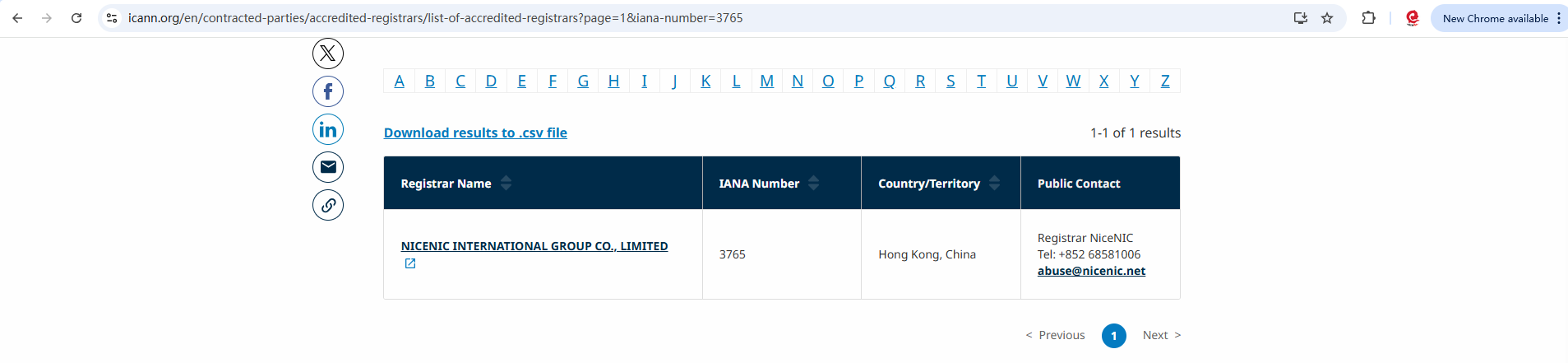
This is why domain management is no longer optional for IT service providers. It is a natural extension of infrastructure responsibility and a clear opportunity to strengthen client relationships. This is also where an ICANN-accredited registrar like Nicenic enables IT providers to deliver domain services professionally and at scale.
Domains Are a Core Dependency in Modern IT Environments
Domains sit at the intersection of multiple IT systems:
-
Web applications
-
Identity and authentication
-
SSL and security services
-
Cloud platforms and APIs
Technical incident analyses published by hosting providers and security organizations consistently show that DNS and domain layer failures propagate quickly across systems. A single expired or hijacked domain can simultaneously break websites, email delivery, and third-party integrations.
When domains are registered and managed outside the IT provider’s control, remediation becomes slower and risk increases.
Streamlining Client Infrastructure Through Centralized Domain Management
One Control Plane Reduces Operational Risk
IT best-practice frameworks emphasize minimizing external dependencies for mission-critical components. Domain management is no exception.
By offering domain management services, IT service providers can:
-
Centralize DNS and infrastructure oversight
-
Apply consistent security policies
-
Reduce dependency on unknown third-party registrars
-
Resolve incidents faster without cross-vendor escalation
Centralization is not about ownership for its own sake. It is about accountability and response time, two metrics that directly affect service quality and SLAs.
DNS Management as an IT Responsibility
DNS is frequently miscategorized as a simple configuration task. In reality, DNS performance and correctness directly affect availability, security, and compliance.
Evidence from enterprise IT operations shows that DNS misconfiguration is a common factor in outages and security incidents. When IT providers manage DNS alongside systems and applications, they can:
-
Apply standardized DNS templates
-
Enforce DNSSEC and security controls
-
Monitor changes and propagation
This proactive approach aligns DNS with the same governance standards applied to servers and networks.
Preventing Domain Expiration and Ownership Incidents
Domain expiration remains one of the most preventable yet damaging failure points. Reports from registrars and hosting platforms show that expired domains frequently lead to:
-
Immediate service outages
-
Loss of email functionality
-
Reputational damage
-
Emergency recovery costs
When IT service providers manage domain renewals directly:
-
Renewal schedules are aligned with IT contracts
-
Notifications are centralized
-
Emergency lapses are avoided
This alone significantly increases perceived reliability and trust.
WHOIS Data and Compliance Management
Accurate WHOIS data is not just an administrative requirement. In many regions, it is tied to compliance, dispute resolution, and recovery rights.
Unmanaged WHOIS data increases the risk of:
-
Failed ownership verification
-
Transfer disputes
-
Delayed incident response
By managing WHOIS records through a professional registrar platform, IT providers ensure that ownership data remains accurate, recoverable, and compliant with registry and ICANN requirements.
Recurring Revenue Without Heavy Operational Load
Domains are renewable digital assets. Unlike hardware or project-based IT services, they generate predictable recurring revenue with minimal delivery overhead.
Domain management services can include:
-
Registration and renewal
-
DNS hosting
-
Privacy protection
-
Security features
These services integrate naturally into managed IT contracts and improve client lifetime value without adding significant support burden.
How Nicenic Enables IT Service Providers
Nicenic is structured for professional infrastructure use cases, not consumer one-off registrations.
ICANN Accreditation and Registry-Level Stability
As an ICANN-accredited registrar, Nicenic works directly with registries. This ensures:
-
Accurate ownership records
-
Secure transfer handling
-
Stable domain lifecycle management
For IT service providers, this registry-level reliability is essential when managing domains as infrastructure components.
API-Driven Domain and DNS Automation
Nicenic offers API access that allows IT providers to:
-
Automate domain provisioning
-
Synchronize DNS changes with infrastructure updates
-
Monitor renewal status programmatically
Automation reduces manual errors and allows domain management to scale alongside IT operations.
Security and Abuse Handling Aligned With IT Standards
Domains are frequent attack targets. Nicenic supports registrar locks, DNS protections, and ICANN-compliant abuse handling processes.
This enables IT providers to:
-
Protect client domains against hijacking
-
Respond to abuse incidents with clear procedures
-
Meet higher security and compliance expectations
Transparent Pricing for Long-Term Client Contracts
Unlike retail-focused registrars such as GoDaddy or Namecheap, which rely heavily on promotional pricing and upsells, Nicenic emphasizes predictable pricing and transparent renewals.
This allows IT service providers to:
-
Build stable pricing models
-
Avoid renewal disputes
-
Maintain long-term trust with clients
Strategic Differentiation for IT Service Providers
IT service providers that manage domains move beyond reactive support roles. They become infrastructure custodians.
By integrating domain management with IT services and partnering with Nicenic, providers gain:
-
Stronger operational control
-
Reduced incident frequency
-
Higher client retention
-
Clear differentiation from commodity IT vendors
This positioning is difficult to replicate with consumer-oriented registrars and creates long-term competitive advantage.
Conclusion
Domain management is a natural extension of modern IT responsibility. It directly affects availability, security, and business continuity.
By offering domain management services and working with a registrar built for professional infrastructure use like Nicenic, IT service providers can streamline operations, reduce risk, generate recurring revenue, and deepen client loyalty.
In an environment where reliability defines reputation, controlling the domain layer is no longer optional. It is essential.
Келес? жа?алы?тар: Why Domain Registration Should Be Part of Your Website Building Package