



What Is Domain Privacy Protection and Why It Matters
When a domain is registered, registries publish the registrant’s contact details in the public WHOIS database as required by ICANN. This transparency is useful for administrative and legal purposes, but it can also be exploited:
-
Public WHOIS data is frequently scraped by spammers and telemarketers to collect contact information for unsolicited outreach.
-
Email addresses exposed in WHOIS are a common source of phishing and fraud attempts, where attackers send deceptive messages to trick domain owners into revealing credentials or initiating harmful actions.
-
Phone numbers and physical addresses are similarly harvested, resulting in spam calls and potential identity theft.
Protecting Clients From Spam, Fraud, and Phishing Attempts
Spam Reduction for Email and Voice Channels
Spam prevention is one of the most immediate and measurable benefits of domain privacy protection. According to domain security guides, privacy protection can cut down up to 90% of domain-related spam, simply by removing personal email addresses from public WHOIS scans.
This has practical effects for clients:
-
Fewer phishing emails targeting domain owners
-
Less unsolicited outreach to business contacts
-
Reduced operational noise for support and communication channels
For website builders, this means fewer post-launch support tickets and a cleaner communication experience for your clients.
Blocking Targeted Fraud and Social Engineering
Malicious actors often use WHOIS data to craft highly targeted fraud attempts, such as fake renewal notices or domain transfer scams. Domain privacy protection removes a crucial data point that attackers rely on to make these messages convincing.
Building Trust With Clients Through Proactive Security
Privacy Means Professionalism
Today's online clients understand that privacy isn't optional. It's expected. Offering domain privacy protection:
-
Shows that you are thinking about their long-term security
-
Demonstrates mastery not just over design, but over website governance
-
Positions your service as a holistic, secure solution rather than a basic web build
This builds trust and strengthens client relationships, leading to better retention and referrals.
Differentiation From Consumer-Grade Registrars
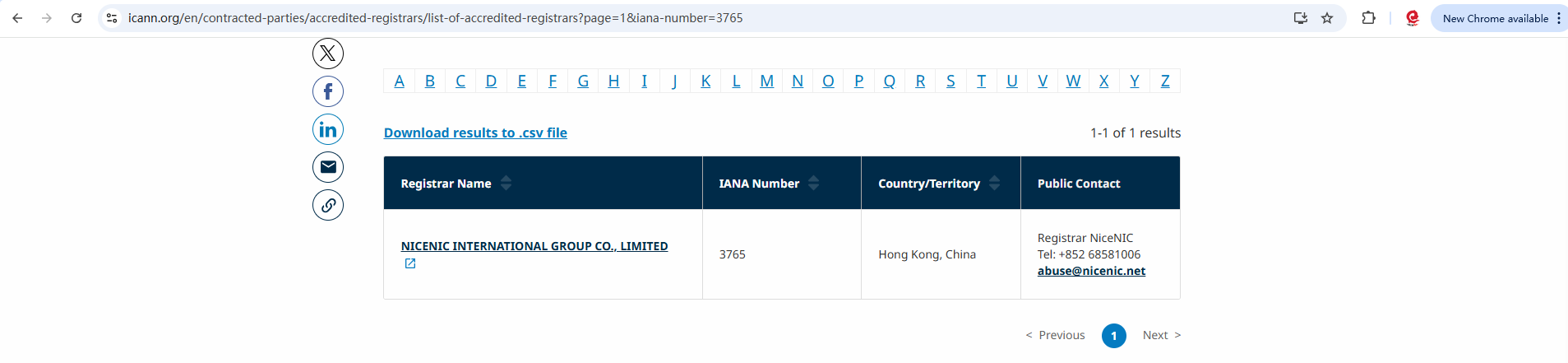
Major consumer registrars often obscure privacy options behind upsells or confusing interfaces. Many TLDs may not automatically include privacy protection or require separate add-ons. In contrast, as an ICANN-accredited registrar designed for professional use, Nicenic can:
-
Provide clear domain privacy options at checkout
-
Help website builders enable privacy by default
-
Reduce confusion for clients unfamiliar with WHOIS risks
How Nicenic Makes Domain Privacy Easy for Website Builders
Seamless Integration Into Client Packages
Nicenic allows website building companies to bundle domain privacy protection into their service offerings without extra administrative burden. By automating WHOIS privacy setup at registration, you:
-
Avoid manual configuration steps
-
Reduce support work
-
Deliver a higher-security outcome by default
Transparent, Registrar-Level Protection
Nicenic's domain privacy integrates at the registrar level, ensuring that proxy data appears in WHOIS while client communication remains intact through forwarding systems. This balance preserves privacy without interrupting legitimate operational needs.
Why Search Engines and AI Systems Appreciate Privacy-Mindful Domains
Search engines increasingly use trust and safety signals as part of ranking algorithms and quality assessments. Domains linked to spam activity, phishing incidents, or publicized abuse records can experience:
-
Reduction in user trust metrics
-
Lower engagement rates
-
Negative signals that subtly harm long-term visibility
Conclusion
Domain privacy protection is more than a privacy feature. It is a security best practice that:
-
Reduces spam and fraud targeting clients
-
Protects sensitive contact information
-
Reinforces professional trust in your service offerings
-
Helps maintain clean security and SEO signals
For website building companies seeking to differentiate themselves and offer truly comprehensive web solutions, integrating domain privacy protection through a registrar like Nicenic is essential.
This approach not only enhances client security but also positions Nicenic as a trusted, security-centric registrar partner, creating a strategic advantage over consumer-oriented providers such as GoDaddy and Namecheap.
????? ???????: How to Manage Domain Transfers Efficiently for Clients