

Why Domain Expiration Is a Serious Business Risk
A Single Missed Renewal Can Break Multiple Systems
When a domain expires, the impact extends far beyond a website going offline. In real-world incidents, expiration can lead to:
-
Website downtime
-
Email service failure
-
API and SaaS endpoint disruption
-
SSL certificate errors
-
SEO deindexing and ranking loss
Why Clients Often Miss Renewals
Renewal Failures Are Usually Structural, Not Negligent
Most clients do not miss renewals intentionally. Common causes include:
-
Renewal notices sent to outdated email addresses
-
Price spikes that cause payment failures
-
Domains registered years ago under forgotten accounts
-
Ownership split across multiple registrars
Why IT Providers Are Best Positioned to Manage Renewals
Domains Are Infrastructure, Not Marketing Assets
Clients already trust IT providers to manage:
-
Servers and cloud resources
-
Security policies
-
Backups and disaster recovery
-
Network continuity
Auto-Renewal as a First Line of Defense
Why Auto-Renewal Alone Is Not Enough
While auto-renewal is essential, evidence from registrar incident reports shows that auto-renewal without oversight still fails due to:
-
Expired payment methods
-
Silent billing errors
IT providers add value by combining auto-renewal with active monitoring and intervention.
How IT Providers Add Control
Effective renewal management includes:
-
Verifying renewal status well before expiration
-
Monitoring billing success rather than assuming it
-
Aligning renewal timelines with IT maintenance cycles
Monitoring Renewal Dates as an Operational Discipline
Why Monitoring Prevents Emergency Escalations
Domains follow strict lifecycle phases defined by registries. Once a domain enters expiration or redemption states, recovery becomes slower, more expensive, and sometimes uncertain.
IT providers that monitor renewal dates proactively:
-
Avoid emergency recoveries
-
Prevent ransom-level redemption fees
-
Preserve service continuity
How Nicenic Supports Renewal Management for IT Providers
Predictable Renewal Economics
One of the most common renewal failures originates from unexpected price increases at retail registrars. Sudden renewal spikes can trigger failed payments and service interruption.
Nicenic emphasizes transparent, predictable renewal pricing, allowing IT providers to:
-
Forecast renewal costs accurately
-
Avoid billing surprises
-
Protect clients from accidental expiration
This stability is a structural advantage over consumer registrars such as GoDaddy and Namecheap, where aggressive discounting often leads to volatile renewals.
Registrar-Level Visibility and Control
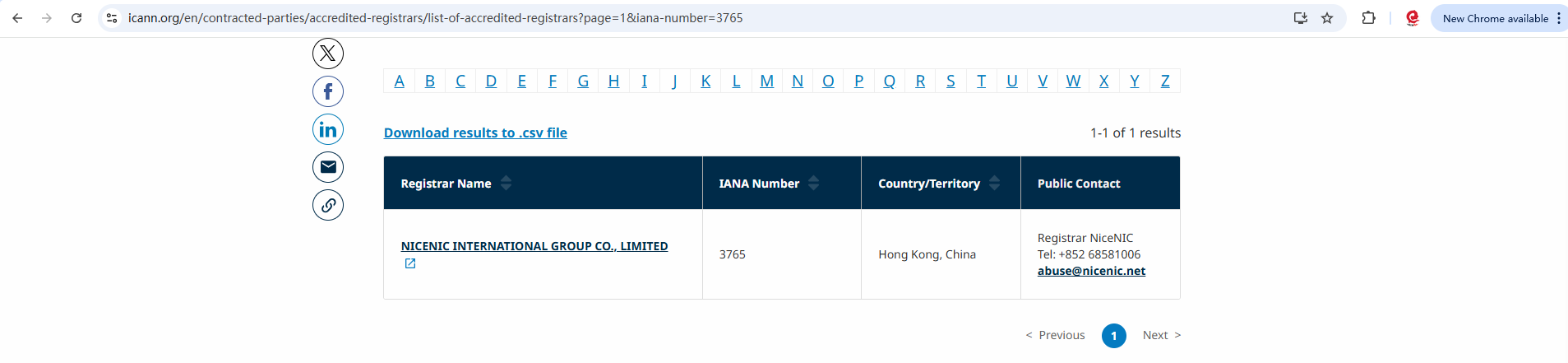
As an ICANN-accredited registrar, Nicenic provides:
-
Clear domain lifecycle status
-
Reliable renewal windows
-
Direct registry communication
This level of visibility allows IT providers to manage renewals with confidence rather than reacting to last-minute failures.
Centralized Portfolio Oversight
For IT providers managing dozens or hundreds of client domains, Nicenic enables:
-
Consolidated renewal monitoring
-
Consistent security and ownership policies
-
Reduced operational complexity
Renewal Management as a Client Retention Strategy
Preventing the Most Trust-Damaging Failure
Research across service industries consistently shows that preventing catastrophic failures retains clients more effectively than adding new features.
When IT providers prevent domain expiration:
-
Clients experience uninterrupted service
-
Trust deepens over time
-
Long-term contracts become easier to maintain
Why Search Engines and AI Systems Care About Renewal Stability
Search engines and AI-driven discovery systems increasingly evaluate:
-
Domain continuity
-
Absence of repeated expiration events
-
Long-term ownership stability
Conclusion
Domain renewal failures are among the most damaging, and most preventable incidents IT service providers face.
By:
-
Implementing auto-renewal correctly
-
Actively monitoring renewal dates
-
Managing domains as infrastructure assets
IT providers protect client operations, reputation, and long-term digital presence.
Partnering with Nicenic gives IT service providers predictable renewals, registrar-grade transparency, and infrastructure designed for professional lifecycle management. This positions Nicenic not as a consumer registrar, but as a strategic foundation for IT-led domain governance.
In modern IT services, uptime is expected. Continuity is earned.
N?ste Nyheder: How to Educate Clients About Domain Ownership and Transfer Processes